How to Choose Commercial Cabinet Installers for Busy Spaces
Commercial cabinet work is different from home installation. These projects deal with heavier daily use, stricter schedules, and more moving parts on site, so small mistakes can turn into delays fast.
That is why the right commercial cabinet installers help protect your budget, reduce downtime, and improve the final look of the space. If you're planning an office, store, clinic, or restaurant, Dr. Cabinet is the kind of partner that keeps the job clear from day one.
What commercial cabinet installers do and where they add the most value
In a commercial space, cabinets support daily work, not just style. They store supplies, frame service areas, hide utilities, and take steady wear from staff and customers.
These crews work in offices, restaurants, retail stores, schools, medical spaces, breakrooms, and reception areas. Teams like Dr. Cabinet handle measurements, layout checks, fitting, secure mounting, door alignment, and finish touch-ups so the cabinets stay reliable long after opening. They also check height, depth, and placement so traffic flow still works.
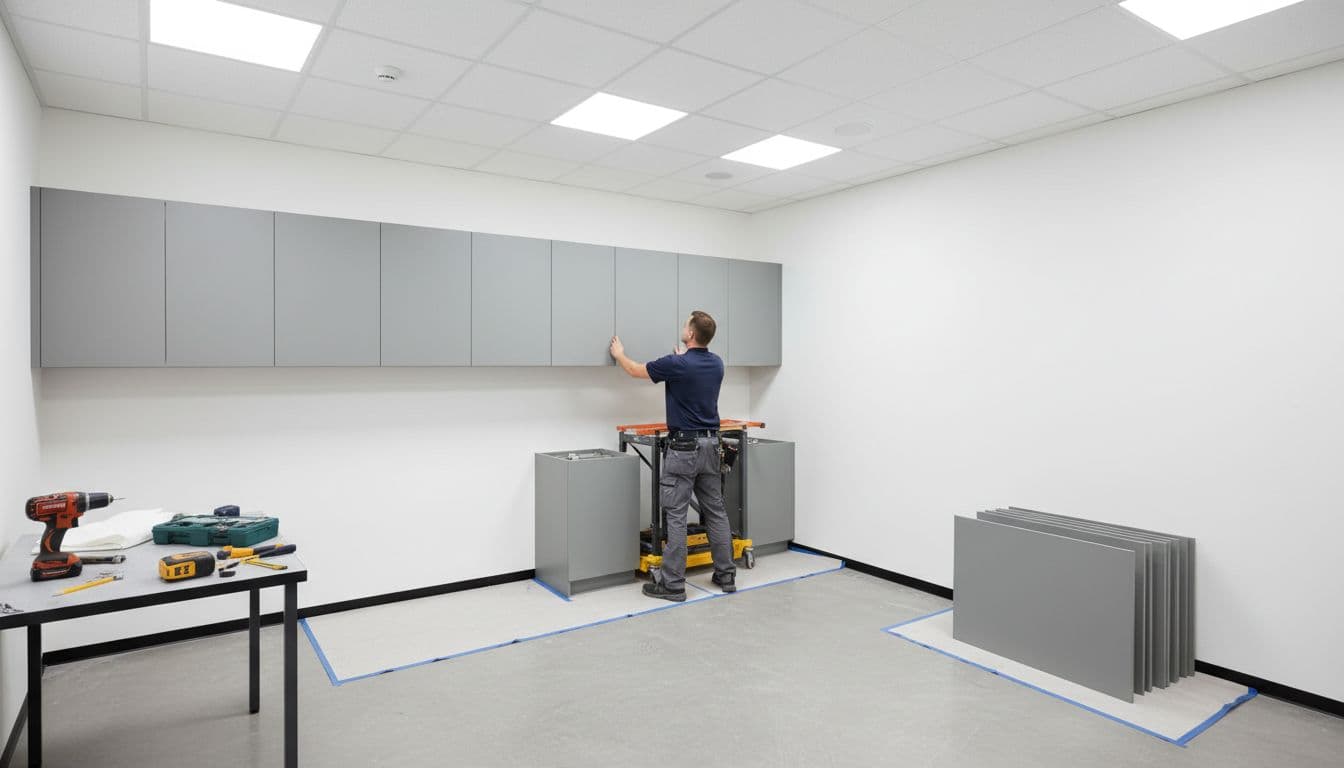
How commercial cabinet work differs from home cabinet installation
Commercial and home installs may look alike, but the job pressure is different. Commercial projects need tougher cabinet boxes, stronger hardware, and careful mounting for heavier loads. Installers also watch access rules, fire needs, and clearances, then coordinate around remodel timelines, business hours, and opening dates.
The table below makes the difference easier to see.
| Focus | Commercial work | Home work |
|---|---|---|
| Daily use | Heavy traffic, repeat use | Lighter family use |
| Hardware | High-cycle hinges and slides | Standard hardware |
| Schedule | Opening dates and trade deadlines | Homeowner calendar |
| Coordination | Multiple trades on site | Fewer moving parts |
That extra coordination is where many delays start. Commercial sites also use surfaces that hold up better against cleaning products, heat, and hard daily wear. A cabinet that fits the wall still has to fit the schedule.
Why experience in your industry makes the job easier
Each setting has its own demands. Restaurants need surfaces that handle spills and frequent cleaning. Medical offices often want easy-to-wipe finishes and tight, clean fits. Retail spaces care about appearance from the sales floor, while offices often focus on breakroom flow and front-desk storage.
A crew that knows your type of space can also plan around health rules, customer traffic, and after-hours access. Experience helps because the team can spot issues early, order smarter materials, and avoid rework. Dr. Cabinet brings that kind of hands-on judgment, which makes the result stronger and easier to maintain.
How to choose commercial cabinet installers you can trust
Price matters, but a cheap bid can cost more later. A good installer explains the process, gives a realistic schedule, and can show commercial projects that match your space. Dr. Cabinet fits that standard because clear planning matters before tools come out, not after problems show up.
Written schedules, clear scope notes, and field verification matter more than polished sales talk. The best teams make the job feel controlled, even when the site gets busy.
Questions that help you compare installers before you sign
Use questions that get past sales talk and help you compare bids on the same ground.
- Have you completed similar commercial jobs in my type of space?
- Who takes final field measurements before ordering?
- Which materials and hardware do you recommend for daily use?
- How will you coordinate with other trades and business hours?
- Can you show insurance, references, and warranty details?
- How do you handle site changes after work begins?
- Who will be my main contact once installation starts?
Short answers are useful. Vague answers are not. You want a team that can explain what happens if walls are out of square, deliveries change, or field conditions shift.
Warning signs that often lead to delays or bad results
Watch for estimates with little detail, especially when labor, trim, and hardware are bundled into one line. Poor communication is another warning sign. If calls go unanswered before the contract, problems usually get worse during the job.
You should also pause when a bid feels rushed, credentials are missing, or there is no proof of past commercial work. Another red flag is a proposal that skips punch-list work or post-install adjustments. Some crews do fine in homes but struggle in active business spaces. That gap often shows up in missed coordination, bad fits, and costly return visits.
What a smooth commercial cabinet project should look like from start to finish
A good install starts well before delivery day. Good commercial cabinet installers begin with a site visit, verify measurements, review drawings, and match materials to how the space will be used. Dr. Cabinet follows that kind of process because fit, timing, and daily function all matter. They also confirm wall conditions, floor level, and access for delivery.
Then the job moves through ordering, delivery timing, installation, final checks, and cleanup. Each step affects the next one, so organized crews keep everyone updated instead of waiting for issues to pile up.
The planning steps that help avoid costly mistakes
Accurate measurements are the base of the job. One bad number can create wall gaps, rubbing doors, or filler pieces that look patched in. Clear drawings and written approvals keep everyone on the same layout before materials ship.
Early coordination with plumbers, electricians, flooring crews, and painters also saves time. When trades work from one plan, cabinets land where they should, outlets stay reachable, and delivery problems are easier to manage. That planning also prevents awkward filler strips and uneven reveals.
Finish quality, safety, and post-install support
At the end, details tell the story. Cabinets should sit level, doors should line up, drawers should glide well, and fasteners should feel solid. Touch-up work on panels, corners, and trim should be clean, not rushed. Safety matters as much as appearance, especially where cabinets hold heavy stock or sit near staff walkways.
Cleanup matters too. Good teams remove packing, wipe surfaces, and do a final walkthrough before sign-off. If a hinge shifts or a drawer needs adjustment after opening, Dr. Cabinet should also offer a clear warranty path and easy follow-up support.
A better project starts with the right team
The best commercial cabinet installers combine skill, planning, and dependable service. That leads to better durability, less downtime, and a cleaner finish for your space.
If you want help with a commercial project, reach out to Dr. Cabinet. The right team saves money during the install and long after the doors open.


Comments
Post a Comment