Lowes Cabinet Installation: Cost, Process, and Limits
Many homeowners consider Lowes Cabinet Installation because it offers one guided path for planning, measuring, ordering, and labor. That can save time and cut down on the chaos that often comes with a kitchen project.
Still, convenience has limits. Dr. Cabinet knows that some kitchens need repair, adjustment, or custom problem-solving more than a retail install package. Before you commit, it helps to know how much work this service saves, what it usually covers, and where it may fall short.
How Lowes Cabinet Installation works from start to finish
The current process usually follows a simple chain: design help, in-home measuring, a quote, product ordering, then installation scheduling. The store team often handles planning and sales, while a local installer or assigned crew handles field measurements and the labor in your home.
The first design meeting and space planning
Most projects start with a design visit, either in-store or online, with a kitchen specialist. You will usually talk about door style, finish, storage needs, appliance locations, and how the room works day to day. If you cook a lot, store bulky pans, or need more drawer space, this is the time to say it.
Budget also starts to take shape here. Pull-out trays, pantry towers, glass doors, crown molding, and soft-close hardware can move the price faster than many homeowners expect. Bring room photos and rough dimensions if you have them. A layout issue on paper is easy to fix. The same mistake after delivery is expensive and frustrating.

In-home measurements and why they matter
The in-home measure is the checkpoint that protects the whole order. The installer records wall lengths, ceiling height, window trim, door swings, appliance openings, and where plumbing, gas, and electrical lines sit. Even a standard kitchen can have uneven walls or tight spots that change cabinet sizes and filler needs.
Don't approve the final order until the field measurement is complete.
Good measurements help prevent gaps, crooked runs, and filler strips that look like last-minute fixes. If you are comparing stock and semi-custom options, this cabinet options comparison gives useful context on how big-box cabinet lines can differ in construction, finish, and price.
Ordering, lead times, and scheduling the install
Once the measurements are confirmed, the quote can be updated and the order can move ahead. In-stock cabinets may arrive fairly quickly, while special-order lines often take longer because the sizes, finishes, and accessories are built around the plan. That timeline matters if you are trying to line up countertops, painters, or a move-in date.
After you accept the quote, the next step is usually delivery planning or product arrival, then installation scheduling. Expect a few contacts along the way. You may hear from the store, the installer, and a delivery team. Keep every document in one place so you can check the scope, model numbers, and timing if something changes. If you need any additional information, please click the link below. https://drcabinet.com/lowes-cabinet-installation/
What Lowe's can handle, and what usually needs another trade
This is where many projects get confusing. The cabinet work is often only one part of the kitchen job, not the entire remodel. Dr. Cabinet sees this same issue when homeowners call after learning that a cabinet crew does not automatically handle every wall, plumbing, or repair problem around the cabinets.
This quick guide helps set expectations.
| Task | Usually part of cabinet install | Often separate |
|---|---|---|
| Set and secure new cabinet boxes | Yes | No |
| Remove old cabinets | Sometimes, if quoted | Yes, if not included |
| Move plumbing or gas lines | No | Plumber |
| Move outlets or wiring | No | Electrician |
| Repair major wall or floor damage | Sometimes minor touch-up | Often separate |
The main point is simple: cabinet labor covers cabinet labor first. Work that changes the room itself often needs another trade.
Cabinet installation tasks that are usually included
A standard install usually covers setting the cabinet boxes, leveling them with shims, fastening them to wall studs, and joining neighboring units so the faces line up. The crew also checks door and drawer alignment, then adds fillers, toe kicks, and trim pieces that were part of the order. If the order includes decorative panels or moldings, those may be installed during the same visit.
Old cabinet removal may be included, but only if it appears on the quote. The same goes for haul-away and cleanup. Never assume demolition is part of the package unless the paperwork says so.
Jobs that may fall outside the service
Plumbing moves are one of the most common extras. If a new sink base shifts the drain line, a plumber may need to come before or after the cabinet crew. The same goes for gas lines, outlets that land in the wrong place, or under-cabinet lighting that needs fresh wiring. Those are not small details if the new layout changes where things sit.
Wall and floor repairs can also add time and cost. Torn drywall behind old cabinets, missing tile, or a low spot in the floor can affect how well the new boxes sit. This short pros-and-cons discussion about big-box stores versus smaller shops shows how often scope and accountability come up when a project needs more than basic cabinet labor.
When a repair-first option can make more sense
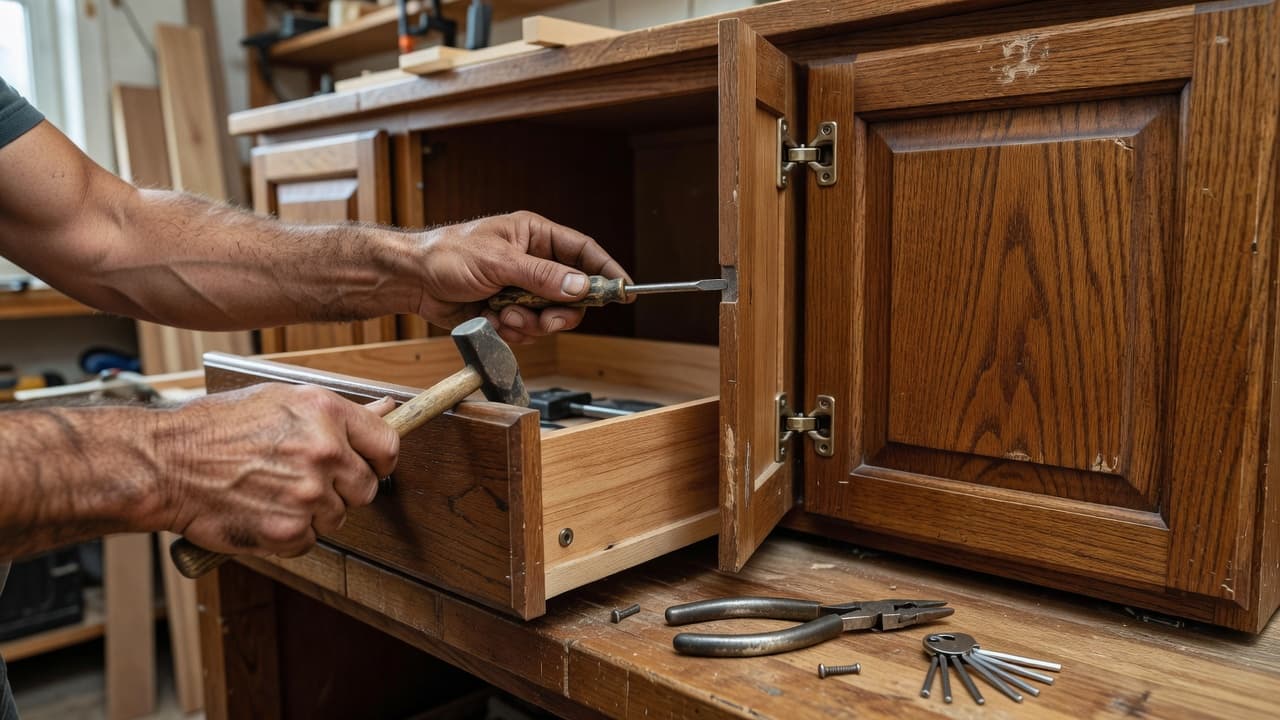
If your cabinet boxes are still solid, replacement may be the expensive answer to a smaller problem. Sagging doors, loose hinges, broken drawer slides, chipped face frames, and worn finishes can often be repaired much faster than a full tear-out. The layout stays the same, and you avoid paying for new boxes you may not need.
That is where Dr. Cabinet can be the better fit. A repair-first approach often saves money, keeps usable materials in place, and cuts down on downtime in the kitchen. It also makes sense when the damage is local, such as water wear under a sink or a row of drawers that no longer close right.
Lowes Cabinet Installation costs, warranty, and details to check
Money questions usually come down to scope, not cabinet price alone. Two kitchens can use similar cabinets and still have very different labor totals because of layout, trim, demolition, or the condition of the walls and floor.
What changes the final price
Cabinet type is the first price driver. Stock lines are often cheaper to buy and faster to install, while semi-custom options add more finish choices, trim details, and size changes. Kitchen size matters, but layout matters just as much. A small kitchen with corners, tall pantry units, and tight clearances can take more labor than a larger straight-wall setup.
Other cost bumps include island cabinets, glass doors, pull-out storage, crown molding, and decorative end panels. Demolition, haul-away, and prep work also matter. If the floor slopes or the walls are out of plumb, the crew may need more time for shimming and adjustment.
What the labor warranty may cover
A basic labor warranty usually protects the workmanship of the installation for a set period written in your contract or estimate. In plain language, that may help if a cabinet was mounted poorly, a filler piece was installed wrong, or alignment problems show up soon after the job ends.
That coverage is separate from the cabinet maker's warranty. Product defects, finish issues, and water damage may follow different rules. Always confirm the exact terms before approval, and ask who handles follow-up service if something needs attention later.
Questions to ask before you sign
Before you approve the job, ask direct questions:
- Are the measurements final, and who handles a size mistake after ordering?
- Does the quote include old cabinet removal, haul-away, and cleanup?
- What room prep is my job, and what prep is the installer's job?
- Which extra fees can appear later, such as wall repair, trim changes, or return trips?
- Who lines up the plumber, electrician, countertop crew, or painter if I need them?
- What does the labor warranty cover, and how long does it last?
Those answers can save days of delay and a lot of avoidable cost.
Is Lowes Cabinet Installation the right choice for your project?
Convenience is the main draw. You can shop cabinets, review design choices, and arrange labor in one place. For many homeowners, that feels easier than collecting separate bids. Dr. Cabinet is a helpful comparison point because some homes need repair skill more than a retail sales process.
When the service is a good fit
This option is often a good fit when you want a guided process and a fairly standard cabinet update. It works well for straightforward kitchens, rental property refreshes, and homes where the layout is staying put. If you want one seller, one quote path, and professional labor arranged for you, that has real value.
Homeowner experiences vary, which is normal with any large retail install network. This homeowner discussion on Reddit gives a candid look at how people weigh price, cabinet quality, and installer experience before they buy.
When a local cabinet expert may be the better call
A local cabinet expert may be the better choice when the boxes are old but salvageable, or when the problem is more about fit than replacement. Water damage under a sink, broken drawer boxes, misaligned doors, loose veneer, and worn finishes often need repair judgment, not a new retail order. Older homes also tend to have odd sizes and site conditions that call for careful adjustment.
Dr. Cabinet is the kind of specialist homeowners call when they want to restore what still works. That route can be faster and less disruptive when the goal is to repair, reface, refinish, or fine-tune existing cabinets instead of replacing the entire setup.
Conclusion
A kitchen project can look simple in the showroom and get more complicated once real walls, pipes, and floors enter the picture. For some homes, Lowes Cabinet Installation is a practical shortcut because the planning and labor are packaged together.
The better move is to compare install, repair, and replacement before you sign. When you know the process, the limits, and the likely cost drivers, you can choose the option that fits your home, budget, and timeline without paying for work you do not need.


Comments
Post a Comment