Cost of Cabinets: Repair, Reface, or Replace?
Cabinet pricing depends on far more than the number of doors in your kitchen. The Cost of Cabinets changes with the condition of the boxes, material choices, layout, finish, labor, and local building conditions.
A loose hinge may need a simple repair, while swollen cabinet boxes may call for replacement. Dr. Cabinet helps homeowners and commercial property managers compare repair, refinishing, refacing, and replacement options across New York City, New Jersey, and nearby areas. Call 201-212-5477 or email infodrcabinet@gmail.com for a free estimate before committing to a major project.
Cost of Cabinets by Project Type: Repair, Refinishing, Refacing, or Replacement
Repair is usually the lowest-cost path. Refinishing comes next, followed by refacing, while full replacement costs the most. The right choice depends on what remains solid beneath the visible wear.
These 2026 U.S. ranges are useful for planning, but they are not fixed quotes. Kitchen size, access, material selection, finish work, and labor can move any project higher or lower.
| Project type | Typical planning range | Best fit |
|---|---|---|
| Targeted repairs | $120 to $600 for many common repairs | Isolated damage, loose hardware, sticking drawers |
| Refinishing | About $1,500 to $4,500 | Sound cabinets with worn paint, stain, or clear coat |
| Refacing | About $3,000 to $13,500 | Strong boxes with dated doors and drawer fronts |
| Full replacement | About $5,000 to $30,000 or more | Failed boxes, major redesigns, or custom storage needs |
For context, Home Guide places many refacing jobs around $5,000 to $13,000. Custom doors, premium wood, or large kitchens can exceed that range.
Small Cabinet Repairs Can Prevent a Larger Remodeling Bill
A door that won't close, a drawer that drags, or a damaged hinge doesn't always mean the cabinet has reached the end of its life. Common fixes include hinge adjustment, door repair, drawer-box repair, replacement hardware, surface touch-ups, and reinforcement around worn screw holes.
Water damage needs closer attention. A small leak under a sink may affect only the cabinet floor. However, soft side panels, mold, or structural swelling can spread beyond one repair.
Dr. Cabinet checks the cabinet box, fasteners, face frame, door alignment, and surrounding moisture before recommending work. A repair should hold up to normal daily use, not hide a deeper problem for a few months.
 ### Refinishing and Refacing Offer a Middle-Ground Upgrade
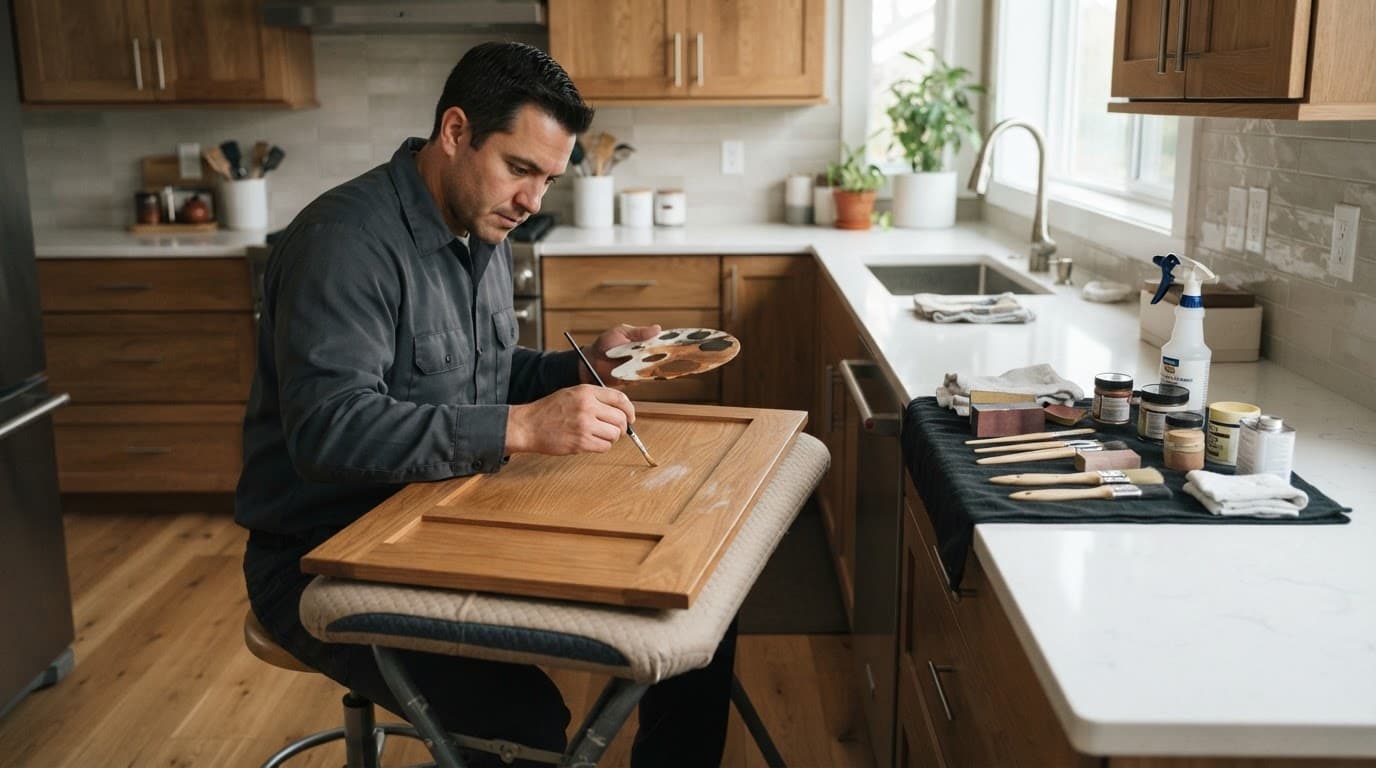
Refinishing keeps the doors and drawer fronts in place. The existing surfaces are cleaned, repaired, prepared, then renewed with paint, stain, or a protective coating. It works well when you like the door style but want to remove yellowing, scratches, fading, or an outdated color.
Refacing changes the visible exterior more dramatically. New doors and drawer fronts are installed, while the cabinet boxes usually stay in place and receive matching veneer or finish material. Refacing commonly runs about $100 to $450 per linear foot, depending on labor and material.
This route makes sense when the layout works and the boxes are square, level, and dry. It can give a kitchen a fresh shaker, slab, or wood-veneer look without the demolition required for new cabinets.
Full Cabinet Replacement Costs More, but May Be Necessary
Replacement makes sense when cabinet boxes have severe water damage, warped panels, weak construction, pest damage, or a layout that no longer fits your needs. A major redesign, such as moving appliances or adding an island, often requires new cabinetry.
The cabinet purchase price is only part of the budget. Demolition, disposal, delivery, installation, countertops, plumbing changes, electrical work, wall repair, backsplash work, and hardware can add substantial cost.
A low cabinet quote can grow quickly when it excludes removal, disposal, and the work needed to make old walls or floors ready for installation.
What Changes the Cost of Cabinets the Most?
Two kitchens with the same footprint can receive very different estimates. Materials, cabinet construction, access, finish quality, and added features have a direct effect on the Cost of Cabinets.
The same is true outside the home. An office kitchenette, restaurant service area, hotel vanity, retail fixture, or healthcare storage wall may require commercial-grade hardware, after-hours access, or durable surfaces for frequent cleaning.
Materials, Door Styles, and Finish Quality
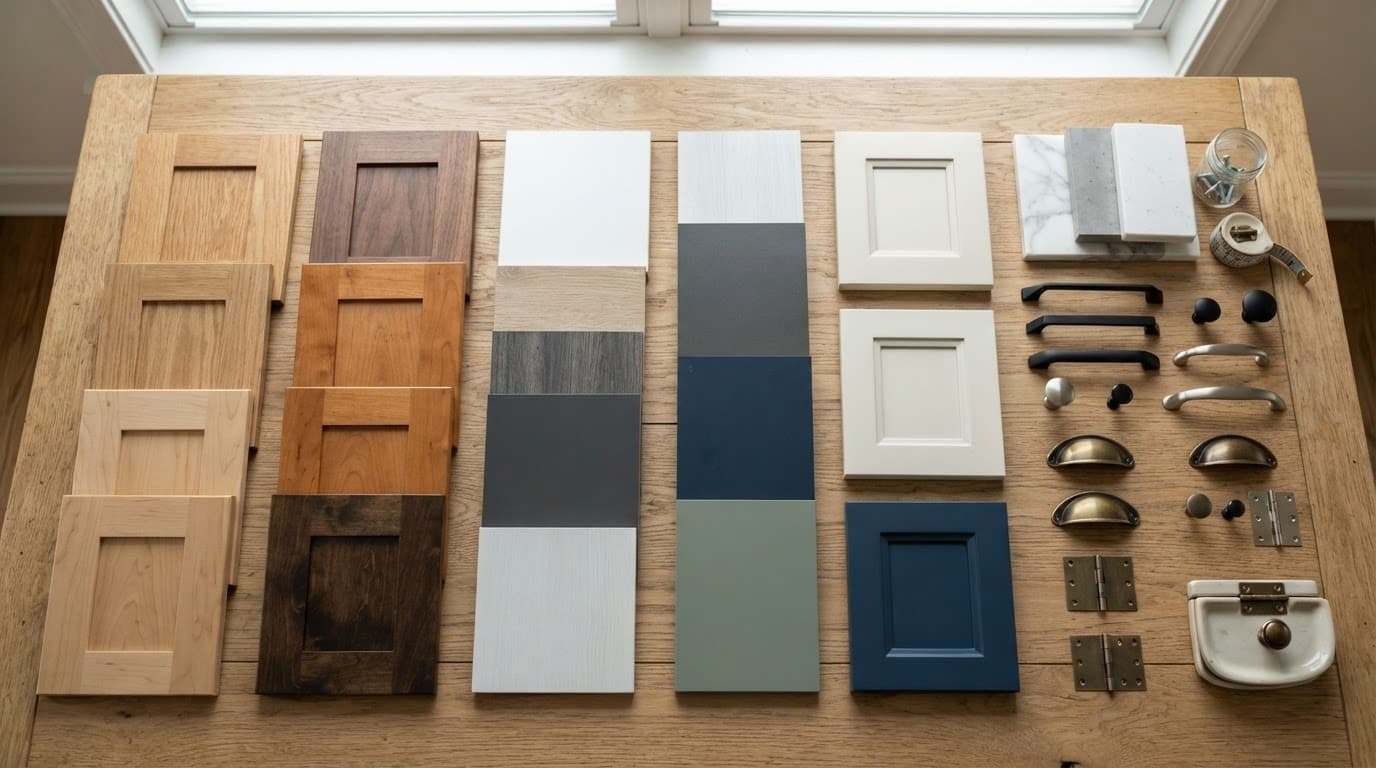
Laminate, melamine, and MDF can control costs while offering many color choices. Plywood construction usually costs more, yet it performs better where moisture and daily wear are concerns. Wood veneer, solid wood, acrylic, and custom-matched finishes raise both material and labor costs.
Door style also matters. A slab door needs less machining than a raised-panel door. Shaker profiles are popular because they suit many interiors, while glass inserts, decorative panels, specialty stains, and detailed paint finishes take more preparation.
Choose materials for the room, not only the showroom sample. Bathroom vanities, restaurant cabinets, and sink bases need finishes that can handle humidity, spills, and frequent cleaning.
 ### Kitchen Size, Layout, and Installation Conditions
Linear footage offers a starting point, but it doesn't tell the full story. Tall pantry units, corner cabinets, deep drawers, islands, fillers, crown molding, and appliance panels all add material and fitting time.
In New York City and New Jersey, apartment access can affect labor. Elevator reservations, limited loading space, parking restrictions, building insurance requirements, and restricted work hours may all add time to a project. Uneven walls and floors can also require shimming, scribing, and custom trim.
Hardware, Storage Upgrades, and Extra Work
Soft-close hinges and drawer slides add comfort and reduce slamming. Pull-out organizers, trash systems, lazy Susans, spice storage, interior lighting, toe kicks, and new handles can improve a kitchen without changing every cabinet.
These choices should appear in the estimate early. Hardware can be a modest upgrade on one cabinet or a meaningful expense across a large kitchen. Custom modifications, such as a pull-out for accessibility or a cabinet built around a pipe, also require more labor.
How to Lower the Cost of Cabinets Without Sacrificing Quality
The best way to manage the Cost of Cabinets is to preserve what still works. Solid cabinet boxes are often worth repairing, refinishing, or refacing, especially when the kitchen layout already supports daily routines.
Dr. Cabinet provides practical options rather than pushing every project toward full replacement. Keeping plumbing and appliance locations in place can also reduce demolition, permit needs, and follow-up repairs.
Compare Repair, Refinishing, and Refacing Before Replacing
Start with cabinet structure. Boxes that are level, stable, and free of major moisture damage may be good candidates for renewal. Next, consider appearance. Refinishing suits intact doors, while refacing fits cabinets that need a new style but still have sound frames.
Then weigh your long-term plans. A budget-conscious refresh before selling may call for repairs and refinishing. A home you expect to keep for years may justify refacing and upgraded drawer hardware.
Compare complete scopes, not advertised starting prices. One quote may include preparation, door adjustments, cleanup, and hardware, while another may exclude them.
Ask for a Detailed Cabinet Estimate
A useful estimate should make the work easy to understand. When you contact Dr. Cabinet at 201-212-5477 or infodrcabinet@gmail.com, share photos, basic measurements, inspiration images, and any deadline or building-access requirements.
Ask for clear details about:
- Labor, materials, preparation, door and drawer repairs, and finishing work.
- Hardware, installation, cleanup, disposal, taxes, and delivery where applicable.
- Possible change orders, especially if hidden water damage or wall repairs appear after work begins.
Written scope details protect your budget and make it easier to compare options fairly.
How to Choose the Best Cabinet Solution for Your Space
The right project matches the condition of the cabinets to the way you use the room. A kitchen may need improved storage, while a bathroom vanity may need moisture-resistant repair. Closets and furniture often benefit from restoration or new hardware rather than replacement.
Dr. Cabinet handles repair, restoration, refinishing, refacing, remodeling, and custom installation for homes, apartments, offices, restaurants, retail spaces, healthcare facilities, hotels, and municipal properties. Building rules, schedule limits, durability needs, and future plans all shape the recommendation.
When Cabinet Renewal Is Better Than Replacement
Renewal is usually the stronger value when cabinet boxes are structurally sound and the layout remains practical. It creates less material waste, reduces disruption, and often shortens the work timeline.
A quality refinish or reface can also give older cabinets a tailored appearance. New doors, matching panels, updated pulls, and soft-close components can change how the room looks and functions without removing every cabinet box.
When Custom Cabinets or a New Layout Are Worth It
Custom cabinetry is worth considering when stock sizes waste space or can't solve a real storage problem. Tight kitchens, unusual walls, accessibility needs, commercial storage demands, and poorly planned layouts often benefit from made-to-fit work.
New cabinets also make sense when an existing layout blocks movement, lacks needed storage, or has failed structurally. Custom work requires more planning and a larger budget, yet it can create a more useful room for years.
A Better Way to Budget for Cabinet Work
The lowest upfront number isn't always the best value. A careful repair or renewal can extend the life of strong cabinets, while replacement is the sound choice when structure or layout has truly failed.
Assess condition first, then compare the full Cost of Cabinets for repair, refinishing, refacing, and replacement. Dr. Cabinet offers free estimates for residential and commercial projects. Call 201-212-5477 or email infodrcabinet@gmail.com to schedule yours.


Comments
Post a Comment