Kitchen Cabinet Water Damage: Repair Before It Spreads
A slow drip under the sink can turn a sturdy cabinet into a swollen, unstable mess. Kitchen cabinet water damage often starts with a loose supply line, leaking drain, dishwasher connection, refrigerator line, or high humidity that lingers unnoticed.
Fast action limits swollen edges, loose joints, mold, and expensive replacement work. Dr. Cabinet helps property owners assess cabinet damage and restore salvageable pieces before problems spread into nearby finishes or flooring.
The right repair begins with finding the moisture source, then giving the cabinet time to dry.

How to Spot Water Damage in Kitchen Cabinets Early
Water doesn't always leave a puddle. It can seep behind a cabinet wall, under a toe kick, or into the base panel beneath stored cleaners. The longer it remains, the more likely the cabinet material will weaken.
Check cabinets after a plumbing repair, dishwasher overflow, or any spill that reached the floor. The material matters too. Solid wood and plywood often tolerate a brief leak better than MDF or particleboard. A leak near the sink may affect only one base panel, while a dishwasher leak can damage several connected cabinets.
Look for Swelling, Stains, Warped Panels, and Soft Spots
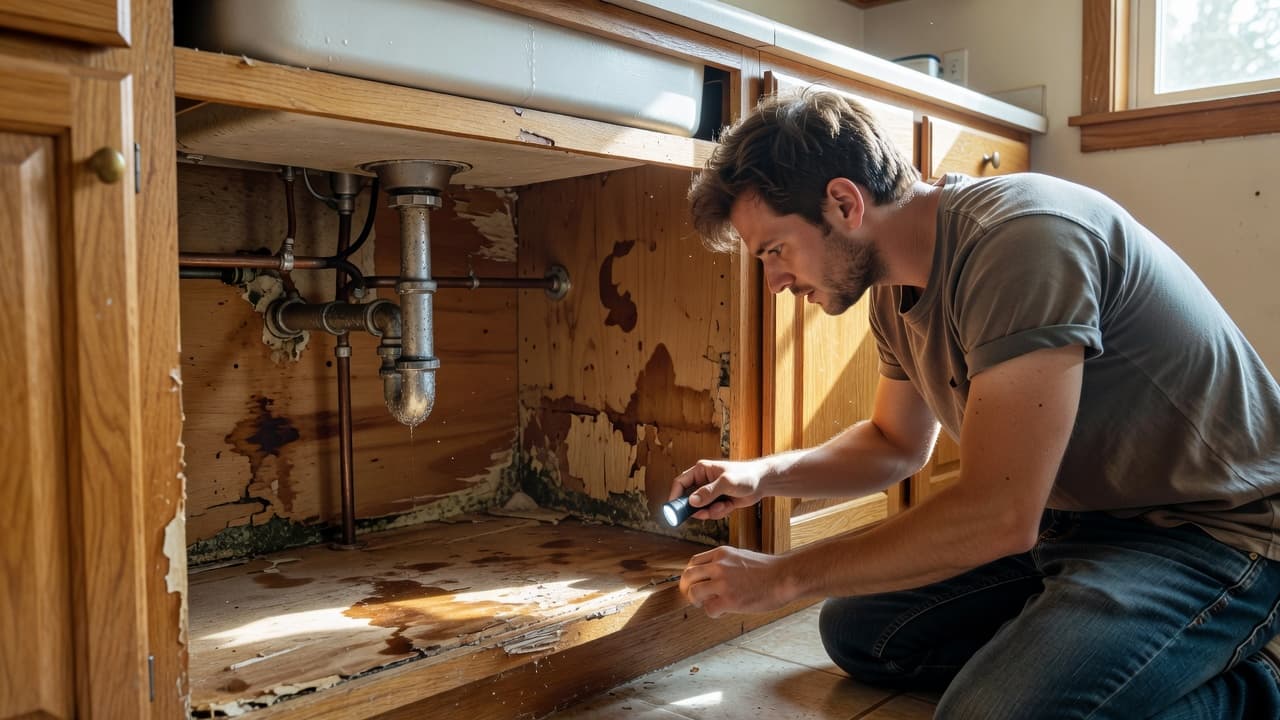
Dark rings, yellow-brown stains, bubbling finish, and peeling laminate are common early warnings. Look closely at cabinet edges, especially where panels meet the floor or wall. Swelling often starts there because exposed edges absorb water quickly.
Open the doors and press gently on the cabinet bottom. A firm surface is a good sign. If it feels soft, flexes, or flakes apart, moisture has likely reached the core material.
Inspect these areas during routine cleaning:
- Under the sink, around drainpipes, shutoff valves, and plumbing cutouts
- Beside the dishwasher, where leaks can travel under cabinet bases
- Near the refrigerator water line and around the floor-level toe kick
- Along shelves, door corners, and hinges that no longer sit squarely
Loose doors and drawers can also point to trouble. Water can shift cabinet boxes enough to throw hinges and drawer slides out of alignment.
 ### Know When Moisture Could Mean Mold or Structural Damage
A musty odor is often the first clue that damp material sits out of view. Look for dark or fuzzy growth, wet insulation, damp drywall behind the cabinet, or particleboard that crumbles when touched.
Don't scrape or sand widespread mold growth. That can spread spores into the room and make cleanup harder. Instead, contact a qualified restoration or cabinet repair professional when mold, hidden moisture, or widespread deterioration is present.
A cabinet can look dry on the outside while its bottom panel and rear wall still hold moisture.
How to Repair Kitchen Cabinet Water Damage Safely
Effective kitchen cabinet water damage repair follows a set order. Stop the leak first, remove water, empty the cabinet, improve airflow, allow full drying, inspect the materials, and then decide what can be repaired.
Sanding, gluing, painting, or reinstalling hardware before the cabinet dries can trap moisture and cause the repair to fail. If a supply line or drain is leaking, shut off the water when needed and correct that source before working on the cabinet.
Stop the Leak and Dry the Cabinet Completely
Remove everything from the cabinet, including liners, cleaners, and loose shelving. Blot standing water with absorbent towels, then use fans and open windows to circulate air. A dehumidifier can help in a closed kitchen or during humid weather.
Avoid blasting the cabinet with high heat. Intense heat can warp wood, loosen veneer, and damage the existing finish. Let the materials dry steadily instead.
Moisture can sit behind a back panel or beneath the cabinet base. When the cabinet has been wet for more than a short spill, a professional moisture inspection can confirm whether hidden areas are dry enough for repair.
Repair Small Stains, Loose Joints, and Hardware
After the wood is completely dry, minor surface stains may respond to light sanding followed by matching stain, paint, or a clear protective finish. Use wood filler for shallow chips, dents, or small voids, then sand it smooth after it cures.
A loose face frame or separated joint may accept carpenter's glue, clamps, and properly placed screws. For stripped hinge holes in solid wood, wood glue and small wood splinters or toothpicks can give screws fresh material to grip.
Replace hinges, drawer slides, or pulls that no longer hold firmly. New hardware won't fix a weak cabinet box, but it can restore smooth function after a sound repair.
Choose Between Repairing and Replacing the Cabinet Parts
Solid wood and plywood can often be restored if the leak was caught early and the panels remain firm. A cabinet pro may repair a bottom panel, side, shelf, door, or drawer front without replacing the whole kitchen.
MDF and particleboard are less forgiving. Once heavily soaked, they swell, lose their shape, and weaken at screw points. Kitchen cabinet water damage in these materials often requires replacement of the affected part.
Targeted replacement makes sense when the cabinet frame remains stable. However, several swollen cabinet boxes or loose wall-mounted units may make a larger replacement project the safer choice.
What Does Kitchen Cabinet Water Damage Repair Cost?
The cost of kitchen cabinet water damage repair depends on what the water reached, not only what you can see. Dr. Cabinet reports that many water-damage cabinet repairs fall between $150 and $500. Broader cabinet repairs often range from about $120 to $600, depending on labor, materials, access, and finish matching.
Use these figures for planning, not as a fixed quote.
| Repair situation | Typical cost consideration |
|---|---|
| Small stain, loose hinge, or minor joint repair | Lower labor and limited materials |
| Damaged bottom panel or toe kick | Added removal, fitting, and finish work |
| Mold, hidden moisture, or several affected cabinets | More drying, restoration, and replacement work |
| Custom panel or discontinued finish | Higher cost for fabrication and matching |
Mold remediation, plumbing repairs, custom parts, and full cabinet replacement can raise the total well beyond a small repair.
The Main Factors That Change Your Repair Estimate
The leak source shapes the scope. A brief spill may leave a surface mark, while a hidden supply-line leak can soak cabinet walls, flooring, and drywall over time.
Material, drying time, finish type, hardware condition, and the number of affected cabinets also matter. Painted shaker doors, stained wood, laminate, and custom veneer each require different matching methods.
Ask for a written estimate that separates plumbing, drying, cabinet repair, refinishing, and replacement. That breakdown makes it easier to see which work protects the cabinet and which work restores its appearance.
When Repair Costs Less Than Replacing the Whole Kitchen
Replacing a single shelf, bottom panel, or door can cost less than tearing out a complete cabinet run. Refinishing can also restore a repaired surface when the surrounding cabinet boxes remain sound.
Full replacement may be more practical when multiple boxes have swollen, cabinet anchors have loosened, or the structure is unsafe. A good assessment focuses on what is still worth saving, not on replacing parts that remain solid.
DIY Fixes or Professional Cabinet Restoration: Which Is Right for You?
The size and depth of the problem should guide the decision. Kitchen cabinet water damage may be manageable at home when it involves a dry surface stain or a loose screw. Active leaks, mold, warped boxes, and recurring dampness need skilled attention.
Small Repairs You May Be Able to Handle Yourself
A careful homeowner can handle limited cosmetic work after the cabinet is dry. Keep the work area ventilated, wear gloves, and never paint over damp material.
- Dry a small spill immediately with towels and airflow.
- Tighten loose hardware and adjust doors after the box is stable.
- Clean a minor surface stain and apply wood filler to shallow damage.
- Touch up paint or stain only after sanding and drying are complete.
Skip DIY repairs if panel edges are swollen, the bottom feels soft, or the cabinet has a persistent odor. Those signs point to damage beneath the finish.
Signs You Should Call a Cabinet Repair Specialist
Call for help when panels crumble, cabinet boxes pull away from the wall, or warped doors won't align. Damaged plumbing cutouts also need attention because pipes can continue to rub or leak against exposed cabinet material.
Dr. Cabinet can determine whether a cabinet needs a local panel repair, replacement part, refinishing, or a more complete restoration. Professional work is especially useful when matching an existing finish or preserving custom cabinetry.
Prevent Future Water Damage Around Kitchen Cabinets
Preventing kitchen cabinet water damage is mostly about catching moisture before it reaches unfinished edges and cabinet cores. Check under the sink regularly, wipe spills quickly, and repair drips while they are still small.
Use plumber-approved fittings for supply lines and drains. A simple leak alarm under the sink can alert you before water reaches the cabinet bottom. Seal vulnerable exposed edges after repair, and keep kitchen ventilation working during cooking and dishwasher use.
Avoid harsh cleaners that strip cabinet finishes. A damaged finish lets water soak into wood and engineered panels more easily.
Check Common Leak Points Before They Cause Trouble
During routine cleaning, inspect sink drains, supply lines, shutoff valves, garbage disposals, dishwasher hoses, refrigerator water lines, and countertop seams. Look for dampness, corrosion, drips, or new swelling around openings.
Pay attention after moving appliances or replacing plumbing fixtures. A connection can look secure but still seep under pressure or during a dishwasher drain cycle.
Get a Cabinet Repair Estimate From Dr. Cabinet
Homeowners, commercial property managers, and business owners in New York, New Jersey, and nearby areas can contact Dr. Cabinet for a cabinet assessment and repair estimate. Services include restoration, refinishing, refacing, hardware repairs, and custom replacement parts.
Repairs are prioritized when practical, which can preserve solid cabinet components and reduce unnecessary replacement. Call 201-212-5477 or email infodrcabinet@gmail.com to schedule a consultation.
Protect the Cabinets You Can Still Save
Stop the leak, dry the cabinet fully, and check for hidden damage before making cosmetic repairs. The cabinet material and structural condition should determine whether repair or replacement makes sense.
Early action can preserve sound cabinet parts and help prevent mold or larger repair bills. For an assessment, contact Dr. Cabinet at 201-212-5477 or infodrcabinet@gmail.com.


Comments
Post a Comment