A Kitchen Cabinets: Materials, Repairs, and Smart Planning
Kitchen cabinets shape your storage, workflow, style, and even a buyer's first impression of your home. A search for "A Kitchen Cabinets" can lead to endless choices, but the best decision starts with your room's condition and daily needs.
Dr. Cabinet helps homeowners and commercial property owners repair, restore, refinish, reface, remodel, and install cabinets across New York, New Jersey, and nearby areas. The right project can improve a tired kitchen without forcing a full demolition.
A Kitchen Cabinets Guide to Types, Styles, and Materials
Cabinets come in several practical groups. Base cabinets support countertops and hold heavy cookware. Wall cabinets use vertical space, while tall cabinets and pantry cabinets store food, brooms, small appliances, or built-in ovens.
The search query "A Kitchen Cabinets" covers stock, semi-custom, and custom products. Stock cabinets are the fastest and least flexible option because they come in preset sizes and finishes. Semi-custom cabinets offer more sizes, door choices, and modifications. Custom cabinets cost more and take longer, yet they fit unusual walls, tight corners, and specialized storage needs.
Door style changes the room's personality. Shaker doors remain popular because their simple frame works in traditional and modern homes. Slim shaker doors feel lighter, while flat-panel and slab doors suit a cleaner contemporary look.
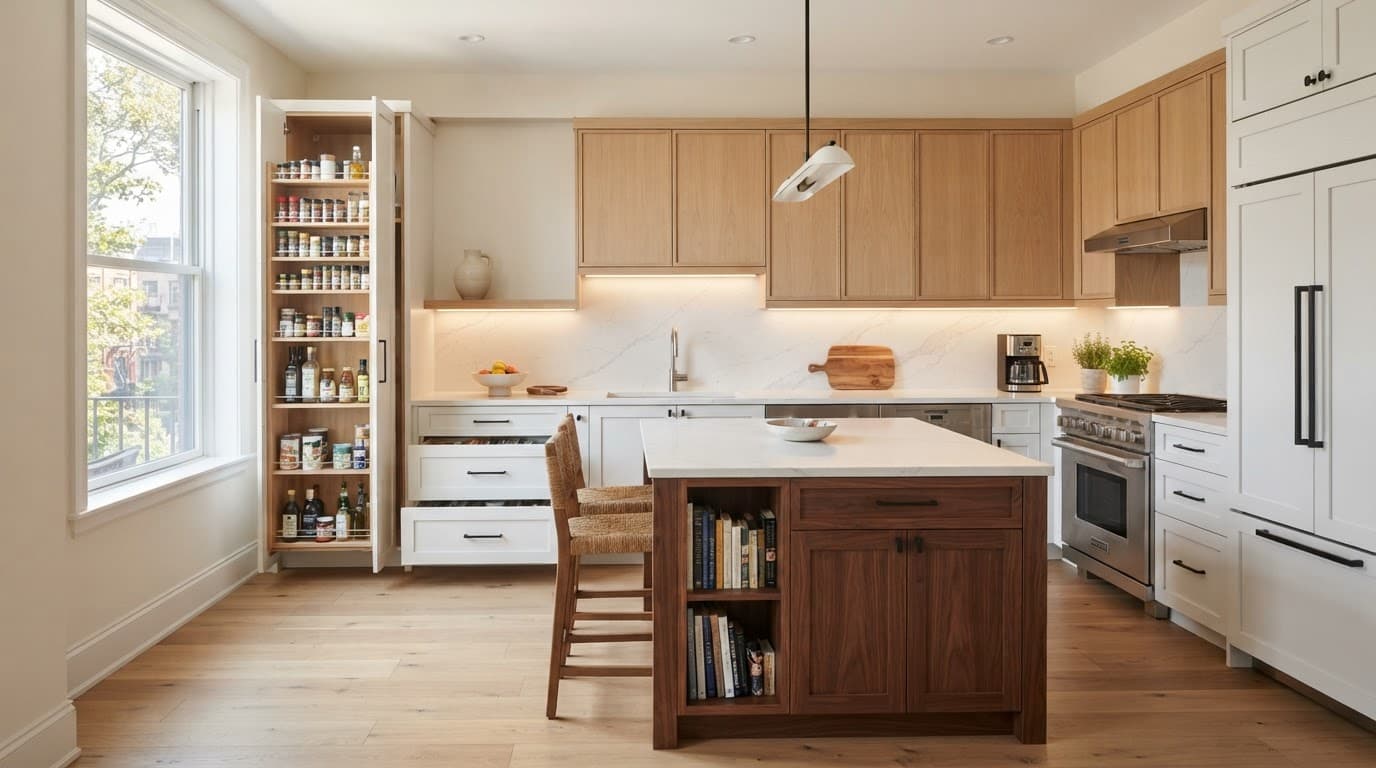 For 2026, wood is taking center stage. The National Association of Realtors reports that wood cabinets have moved ahead of white finishes in current preferences. White oak, walnut, smoked oak, warm neutrals, green, and deep blue all bring warmth without making a kitchen feel dated. Layered wood finishes, such as a walnut island with light oak perimeter cabinets, add depth.
White cabinets still work well, especially in small or low-light kitchens. They remain a lasting choice when paired with warmer hardware, natural stone, or wood accents.
Which Cabinet Materials Hold Up Best in a Busy Kitchen?
Cabinet doors can look great while weak boxes, thin shelves, or poor finishes cause problems later. Ask what sits behind the door before you commit.
Plywood is a strong choice for cabinet boxes because its layered construction resists warping better than many low-cost alternatives. It handles everyday use and moderate moisture well. Solid wood offers a premium natural look and can often be repaired, but it expands and contracts with humidity.
MDF creates an exceptionally smooth painted door surface. It has no visible grain, so painted finishes look even and clean. However, MDF needs careful edge sealing because standing water can cause swelling. HDF is denser and tougher than MDF, while particleboard is the lowest-cost option and the least forgiving around leaks.
Laminate, melamine, thermofoil, and wood veneer can provide a finished look at different price points. Laminate and melamine are easy to wipe down, though chipped edges are difficult to disguise. Thermofoil offers a smooth, affordable finish but can react poorly to heat. Wood veneer gives the appearance of real wood over an engineered core, although refinishing options are limited.
A cabinet's long-term performance depends on box construction, shelf thickness, drawer parts, edge details, finish quality, and warranty, not the door style alone.
How Cabinet Style and Storage Features Change the Room
A homeowner who starts with "A Kitchen Cabinets" may focus on color first. Daily convenience usually depends more on storage details. Deep drawers make pots easier to reach. Pull-out shelves prevent food from disappearing in the back of a pantry. Tray dividers, drawer organizers, and waste pull-outs reduce countertop clutter.
Soft-close hinges and drawer slides stop doors from slamming. Pocket doors can hide coffee stations or appliance garages without blocking an aisle. Under-cabinet lighting makes prep areas safer and gives the room a softer evening look.
Rounded islands, arched details, concealed storage, and integrated lighting are appearing in more new kitchens. Still, choose features that suit how you cook and clean. A fashionable door profile matters less if a drawer cannot open beside the dishwasher or refrigerator.
Should You Repair, Reface, or Replace Your Kitchen Cabinets?
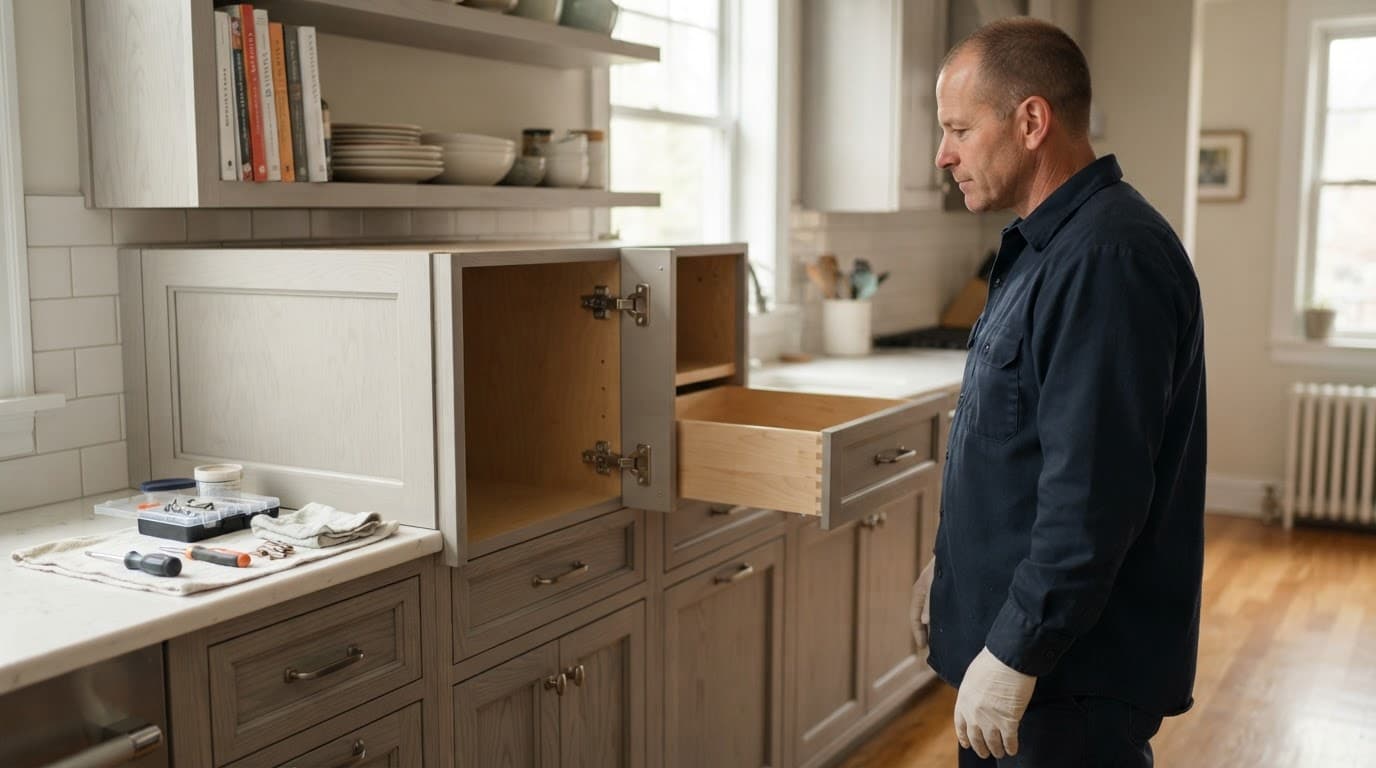
A search for "A Kitchen Cabinets" doesn't always mean you need new cabinetry. Repair makes sense when the cabinet boxes remain sound and the problem is limited. Dr. Cabinet looks for practical ways to renew existing cabinets before recommending full replacement.
Loose doors, broken hinges, worn drawer tracks, scratches, chipped finishes, and damaged hardware often respond well to targeted work. Refacing updates doors, drawer fronts, and visible exterior surfaces while keeping usable cabinet boxes. Replacement is the better choice when water damage has weakened the structure, the layout wastes space, or major changes require new cabinet locations.
 ### When Cabinet Repair Is the Most Cost-Conscious Choice
Repair limits disruption and reduces waste. Door alignment, hinge replacement, drawer repair, finish touch-ups, new pulls, and soft-close conversions can make an older kitchen feel far more functional.
Dr. Cabinet can repair cabinet issues in kitchens, bathroom vanities, closets, and furniture. The same work helps apartments, restaurants, offices, retail spaces, hotels, and other commercial properties where damaged cabinetry affects daily use.
A few well-chosen upgrades can change the experience of an existing room. For example, organizers in a deep base cabinet and smooth drawer slides may solve a storage complaint without changing the cabinet layout.
When Refacing or Custom Installation Makes More Sense
Refacing works when cabinet boxes are structurally sound but doors and finishes feel worn or dated. New drawer fronts, doors, veneers, and hardware can create a major visual change while preserving the existing footprint.
Custom cabinet work is useful for narrow kitchens, awkward walls, apartment layouts, accessibility needs, and tight corners. It can also create space for a microwave drawer, pull-out pantry, recycling center, or built-in storage around a radiator.
Before installation begins, confirm appliance locations, plumbing, electrical needs, ventilation, ceiling height, and clearances. Condo boards and buildings may have rules for work hours, insurance, elevator access, and debris removal.
How to Choose Kitchen Cabinets, Set a Budget, and Plan Installation
Pricing for an "A Kitchen Cabinets" project depends on far more than cabinet material. Quantity, door style, cabinet construction, custom work, hardware, demolition, delivery, labor, countertop changes, plumbing, electrical work, and local conditions all affect the final estimate.
Start with the layout. Identify wasted corners, overloaded drawers, poor appliance clearances, and items that lack a home. Then choose a door style and finish that work with the rest of the house. Finally, decide whether repair, refacing, partial replacement, or a full remodel best fits the project.
These material ranges are broad product-cost examples, not guaranteed installed prices:
| Cabinet material | Broad project range |
|---|---|
| Solid wood | $5,000 to $25,000 |
| Plywood | $2,500 to $8,000 |
| MDF | $1,500 to $5,000 |
| HDF | $2,000 to $7,000 |
| Particleboard | $1,000 to $4,000 |
A local estimate is needed for accurate New York and New Jersey pricing. Dr. Cabinet provides free estimates and personalized planning based on the cabinet condition, room measurements, and desired result. Call 201-212-5477 or email infodrcabinet@gmail.com to discuss the project.
Questions to Ask Before Ordering or Hiring a Cabinet Professional
Bring these questions to the estimate meeting:
- What material will you use for cabinet boxes, shelves, doors, and drawer fronts?
- Have you measured appliance openings, plumbing, electrical outlets, and door clearances?
- How will the finish hold up against moisture, heat, and routine cleaning?
- Which hinges, drawer slides, pull-outs, and organizers are included?
- Does the estimate include delivery, installation, cleanup, and debris removal?
- What happens if hidden damage or a change order affects the scope?
- What payment schedule, insurance coverage, warranty, and timeline apply?
Review door samples in your actual kitchen lighting before you order. Dr. Cabinet can identify repair and restoration opportunities before expensive demolition begins.
Frequently Asked Questions
Does an "A Kitchen Cabinets" project always require a full remodel?
No. Many projects involve repairs, refinishing, new hardware, or refacing rather than full replacement. The cabinet boxes, layout, and water damage level determine the sensible scope.
How long should kitchen cabinets last?
Well-built cabinets can last decades with normal care. Hinges, drawer slides, finishes, and doors often need attention sooner than the cabinet boxes.
Can laminate or thermofoil cabinets be refinished?
They are harder to refinish than solid wood. A professional can sometimes repair minor damage or repaint suitable surfaces, but peeling thermofoil and damaged laminate may call for replacement doors or refacing.
Do cabinet projects need permits in New York or New Jersey?
Cabinet-only work may not require a permit. However, moving plumbing, electrical wiring, gas lines, ventilation, or walls can trigger permit and building requirements.
Will new cabinets improve resale appeal?
Functional storage, durable finishes, and a cohesive kitchen can improve buyer appeal. Avoid overly personal choices if you expect to sell soon, and prioritize quality construction over short-lived trends.
Choose the Cabinet Solution That Fits Your Home
The right cabinet decision depends on condition, layout, storage needs, style, material, and budget. Repair, restoration, refinishing, or refacing can often deliver the result you want without replacing every cabinet.
Dr. Cabinet provides tailored cabinet service for homes and commercial properties in New York, New Jersey, and surrounding areas. Request a free estimate at 201-212-5477 or infodrcabinet@gmail.com.


Comments
Post a Comment