Cabinet Damage: Repair, Refinish, or Replace?
A swollen cabinet floor, peeling veneer, or door that no longer closes can make a room feel neglected fast. Cabinet Damage isn't always a reason to replace an entire kitchen or bathroom, but waiting can turn a small repair into a larger structural problem.
The right choice depends on the material, the source of the problem, and how far it has spread. Dr. Cabinet provides practical repair, restoration, refinishing, refacing, and replacement guidance for homes and businesses. Start by finding out what failed and why.
Cabinet Damage: How to Identify the Problem Before It Gets Worse
Cabinet Damage can affect the finish, hardware, doors, drawers, or the cabinet box itself. Surface flaws are often repairable, while soft cabinet bottoms and warped boxes need closer attention.
Inspect doors and drawers first, then look inside the cabinet. Check hinges, slides, joints, shelf supports, wall contact points, and the floor underneath. Before cosmetic work begins, fix the leak, impact source, or humidity problem that caused the damage.
The Most Common Signs of Cabinet Damage
Watch for swelling, bubbling paint, peeling veneer, dark stains, loose joints, and a finish that feels rough or sticky. A scratched face frame or worn door finish is usually a surface issue.
However, soft wood, crumbling particleboard, sagging shelves, and doors that have shifted out of square can point to a failed cabinet box. Hinges that repeatedly pull loose may mean the surrounding material can no longer hold screws. Drawers that stick can result from swollen sides, damaged slides, or a cabinet opening that has warped.
Why Water Damage Often Starts Under the Sink
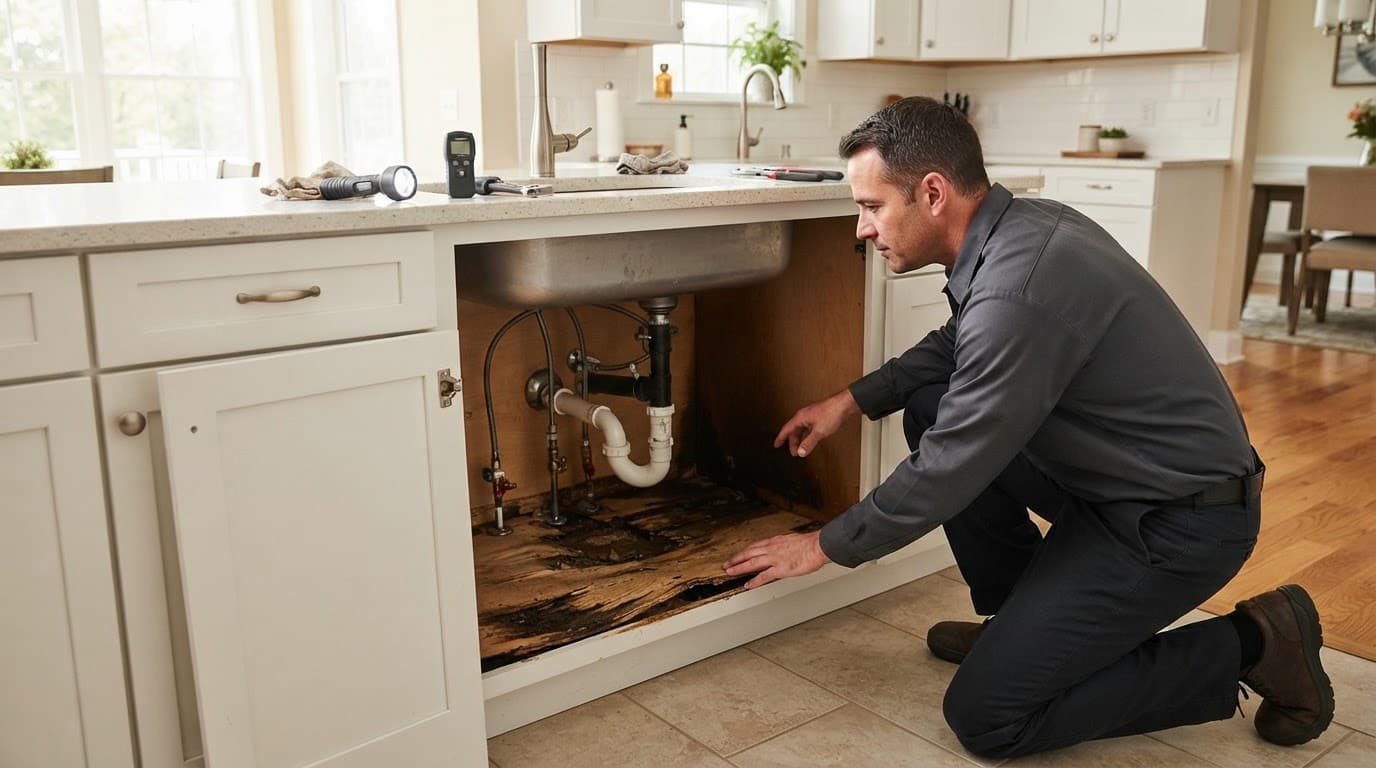
Sink-base cabinets take the brunt of slow plumbing leaks, loose supply lines, condensation, and spills. Water collects on the cabinet floor, then soaks into bottom edges before it becomes visible outside the cabinet.
First, stop the leak and remove standing water. Next, empty the cabinet, open doors for airflow, and inspect nearby walls and flooring. Don't paint, caulk, or cover damp material because trapped moisture can feed mold growth.
Cabinet floors and lower edges often fail before cabinet doors because they absorb water at exposed seams.
Wet materials that stay damp for more than 24 to 48 hours deserve prompt attention, especially if there is a musty odor or visible discoloration.
When Can Cabinet Damage Be Repaired, Refinished, or Refaced?
Repair is usually a sound choice when the cabinet box remains solid and the problem affects one component. A broken hinge, worn drawer slide, chipped door, loose joint, or small veneer section doesn't require a full kitchen tear-out.
Refacing is a middle option for strong cabinet boxes with dated or damaged doors and drawer fronts. It gives the room a new look while keeping the existing layout. Moisture that has entered the box material, though, calls for a hands-on inspection before refinishing or refacing. https://drcabinet.com/cabinet-damage/
Cabinet Repairs That Can Restore Appearance and Function
Localized work can include veneer patching, sanding, touch-up work, repainting, refinishing, hinge replacement, drawer-slide replacement, door repair, and joint reinforcement. A damaged sink cabinet floor can often be removed and rebuilt if the sides and back remain stable.
These repairs preserve matching cabinets, reduce disposal, and avoid unnecessary disruption. A skilled repair also accounts for wood grain, sheen, door alignment, and hardware spacing. Small details matter when one repaired door sits beside older cabinetry.

Red Flags That Usually Mean Cabinet Replacement
Swollen MDF and particleboard rarely return to their original strength after soaking. Replacement is often safer when material has blackened, softened, crumbled, separated at the veneer, or lost its square shape.
Extensive mold, flood exposure, and long-term water intrusion also change the decision. If the cabinet box cannot hold fasteners, support a countertop, or keep doors aligned, patching may only postpone another failure. Replacing the affected section can cost less than repeated repairs.
What Does Cabinet Damage Repair Cost?
Pricing depends on labor rates, cabinet materials, access, the number of affected areas, finish matching, disposal, and moisture cleanup. Damage behind a sink or along a shared wall can take more time because the technician may need to remove failed material before rebuilding it.
Many standard repairs fall around $200 to $490. Water-related repairs often run about $150 to $500 per affected area, although mold removal and structural rebuilding can raise the total substantially.
| Repair scope | Common U.S. estimate |
|---|---|
| Minor cabinet repair or alignment | $200 to $490 |
| Water-damage repair under a sink | $150 to $500 per affected area |
| Local sink cabinet floor repair | $150 to $200 |
| Replacement of one water-damaged cabinet | $250 to $600 |
| Larger sink-floor replacement project | $800 to $3,500 |
The lower figures usually apply to limited repairs. Broader work involving demolition, drying, mold remediation, doors, or cabinet-box replacement can cost several thousand dollars.
How to Keep Repair Costs Under Control
Fixing a leak early is the most reliable way to limit the bill. Drying the area promptly can also prevent a small soft spot from spreading to adjacent cabinets, flooring, or drywall.
Ask for a written estimate that separates labor, materials, moisture remediation, disposal, and warranty coverage. Then compare the cost of repairing the existing box, refacing sound cabinetry, and replacing only failed sections. Full replacement isn't always the best value.
How a Professional Cabinet Repair Service Works
At Dr. Cabinet, the process begins with a close inspection of the cabinet material, moisture source, and structural condition. The team can protect nearby counters and floors, remove failed components, repair or replace affected parts, and match the finish as closely as possible.
Dr. Cabinet works on kitchen cabinets, bathrooms, vanities, closets, furniture, and custom storage. Commercial repairs can also address offices, restaurants, hotels, retail spaces, and healthcare facilities where damaged cabinetry affects daily use and appearance.
What to Ask Before Hiring a Cabinet Repair Company
A good contractor should explain the cause of the damage, not only cover the visible marks. Ask direct questions before approving work:
- Ask whether the company has repaired water-damaged cabinet boxes, not only cabinet doors.
- Request a clear repair-versus-replacement recommendation and the reason behind it.
- Confirm how the contractor will handle color, sheen, grain, and hardware matching.
- Ask about mold limits, drying requirements, timeline, cleanup, and disposal.
- Request itemized pricing, warranty terms, and proof of applicable insurance or licensing.
Dr. Cabinet tests doors, drawers, and hardware before completion, then explains simple care steps for the repaired area. For a free estimate, call 201-212-5477 or email infodrcabinet@gmail.com.
Frequently Asked Questions
Will homeowners insurance cover damaged cabinets?
Coverage depends on the source of the water and the terms of the policy. Sudden, accidental damage may receive different treatment than a long-term leak or maintenance issue, so document the damage and contact the insurer promptly.
How long does a cabinet repair usually take?
A hinge, drawer slide, or small touch-up may take one visit. Drying, rebuilding a sink base, matching a finish, or replacing components can require more time because materials and moisture conditions affect the schedule.
Can a repaired cabinet match older cabinets?
A professional can often create a close match by adjusting stain color, sheen, paint tone, and grain direction. Sun exposure and age can make an exact match difficult, especially with older wood finishes.
Should I add a liner under the sink after repairs?
A waterproof liner can help contain minor spills and make future leaks easier to spot. It should go in only after the cabinet is fully dry and the plumbing issue has been corrected.
Is a musty cabinet odor a serious concern?
A persistent musty odor can mean moisture remains inside the cabinet, wall, or flooring. Remove stored items, check for active leaks, and arrange an inspection before sealing the area with paint or new panels.
Protect Your Cabinets Before Small Problems Spread
Cosmetic flaws and isolated hardware failures can often be repaired without replacing the whole cabinet. Yet swollen, moldy, softened, or structurally weak boxes need a more careful solution.
Fast leak repairs and a professional evaluation protect the rest of the room from avoidable damage. Dr. Cabinet can assess the condition, recommend a practical repair or replacement path, and provide a free estimate at 201-212-5477 or infodrcabinet@gmail.com.


Comments
Post a Comment