Wood Renew for Cabinets: Choose the Right Fix First
People searching for wood renew may need a cleaner, a furniture restorer, a cabinet touch-up, or a professional renewal service. Those are different jobs, and using the wrong product can leave cabinets blotchy, sticky, or damaged.
Dr. Cabinet helps homeowners and businesses repair, restore, refinish, and improve existing cabinets for less than full replacement. The right choice starts with the cabinet's material, finish, and condition.
What "wood renew" means for cabinets
Wood renewal can mean cleaning grime from a finish, repairing a scratched door, restoring faded color, or applying a completely new finish. The phrase wood renew is broad, so it doesn't point to one universal product or process.
For example, Perma-Chink Wood ReNew is a biodegradable percarbonate cleaner for grayed, weathered exterior wood. It is designed for siding and log walls before finishing, not for finished kitchen cabinetry. Perma-Chink also warns against spot-cleaning with it because uneven results can occur.
Cabinet renewal is more focused. It may involve doors, drawers, vanities, closets, hardware, and furniture repairs. A professional can repair the issue that is present instead of treating every worn surface as a refinishing project. Ready to restore your wood’s natural beauty? Learn more about our Wood Renew service and get started today.
How to tell whether cabinets need cleaning, repair, or refinishing
Light dullness, fingerprints, cooking residue, and surface grime often respond well to careful cleaning. Shallow scratches, loose pulls, sticking drawer slides, and worn hinge screws may need small repairs or touch-ups.
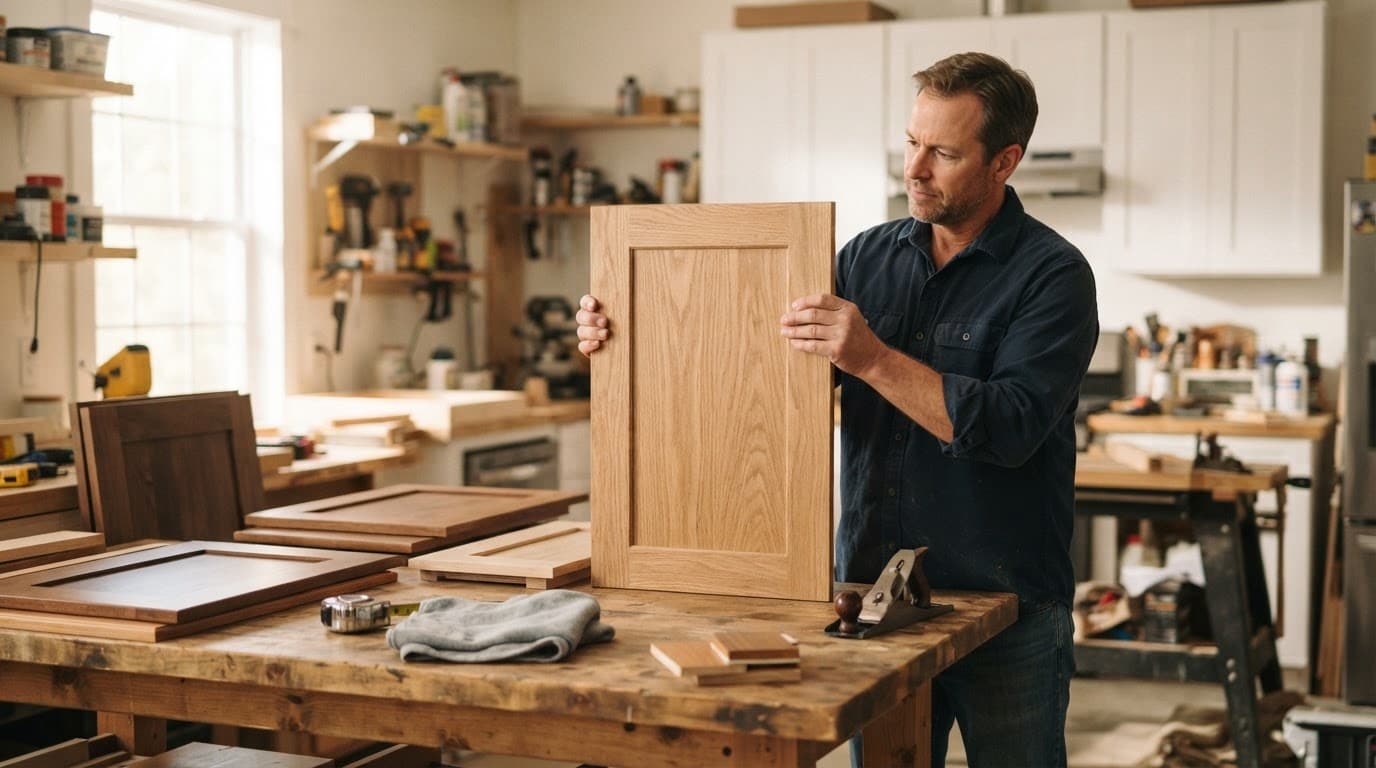
Peeling finish, deep stains, faded color, smoke damage, and an outdated stain may call for refinishing. Refacing can make sense when cabinet boxes remain solid but doors and drawer fronts no longer fit the room.
Swollen panels, water damage, broken hinges, warped doors, and damaged drawer boxes need an inspection before any restorer goes on. Dr. Cabinet can identify structural problems first, which helps prevent a temporary product from hiding a repair that still needs attention.
Why wood type and existing finish matter
Solid wood, veneer, painted cabinets, laminate, and stained finishes don't react the same way to cleaners or abrasives. Veneer can be thin, while painted finishes may soften or lose sheen when exposed to the wrong solvent.
A product intended for bare exterior wood can damage a sealed kitchen cabinet surface. Before trying any wood renew treatment, check the label for compatible materials and finishes.
Test every cleaner, polish, or touch-up product inside a cabinet door or another hidden location. That small test can reveal color change, streaking, tackiness, or finish loss before it affects the visible cabinets.
A safe wood renew process for cabinet surfaces
A careful refresh can improve cabinets with sound finishes, but it can't restore every damaged surface. Work slowly, use a small amount of product, and follow the manufacturer's instructions for drying time.
First, remove dust and grease. Then protect counters, flooring, appliances, and nearby walls with drop cloths or paper. Apply product to a soft cloth rather than pouring it directly onto the cabinet.
Prepare the room and test the product first
Open windows and doors for ventilation. Wear gloves, keep products away from food-prep surfaces, and move dishes and pantry items away from the work area.
Never mix cleaners. Combining household products can create fumes, damage finishes, or leave residues that interfere with polish and coatings.
Apply a small amount to a hidden spot and let it dry fully. Check the color in normal room lighting before treating the rest of the door.
Fine abrasion can help with certain finishes, but 0000 steel wool should only be used when both the product directions and the cabinet finish allow it.
Common products for furniture, cabinets, and exterior wood
Product names can sound similar even when their purposes are far apart. Match the product to the surface, not the promise on the label.
| Product category | Example | Best fit |
|---|---|---|
| Furniture finish restorer | Howard Restor-A-Finish | Minor color loss and surface wear on compatible finished wood |
| Wood polish and conditioner | Howard Feed-N-Wax | Finished wood cabinets that look dry or faded |
| Oil-finish maintenance | Rubio Monocoat Renew | Compatible Rubio Oil Plus 2C surfaces |
| Wax-based furniture care | Bee's Wax Renew | Suitable furniture and cabinet surfaces when label directions allow |
| Exterior wood cleaner | Perma-Chink Wood ReNew | Weathered exterior wood before finishing |
| Exterior wood treatment | I Wood C Wood ReNew | Bare or weathered wood only when manufacturer instructions match the surface |
Howard says Feed-N-Wax contains carnauba wax, beeswax, and conditioning oils. It is marketed for wood cabinets, doors, trim, antiques, and tables. However, wax or oil products can create adhesion problems before painting or refinishing, so don't apply them to cabinets you plan to coat soon.
Wood cabinet renewal vs. refinishing, refacing, and replacement
Cabinet work falls into four common levels. Each one changes the look, durability, disruption, and cost of the project.
| Option | What changes | Best for |
|---|---|---|
| Renewal | Cleans, conditions, and improves a sound surface | Mild fading, grime, and shallow marks |
| Refinishing | Repairs and replaces the existing finish | Peeling, stains, worn color, or major finish changes |
| Refacing | Replaces doors and drawer fronts, keeps cabinet boxes | Sound cabinet boxes with dated door styles |
| Replacement | Removes existing cabinets and installs new ones | Severe damage, poor layout, or failed cabinet boxes |
A wood renew approach works best when the finish still bonds well and the cabinet structure remains stable. Refinishing goes further because it addresses the coating itself.
When a quick cabinet refresh is enough
A surface refresh is a good fit for cabinets with solid construction, mild fading, shallow scuffs, and routine kitchen grime. It can also help a room look cleaner before a sale, tenant turnover, or event.
Still, a polish can't correct a warped panel or a broken drawer box. It also won't stop water damage that has reached cabinet seams, particleboard cores, or veneer edges.
If doors feel loose, drawers scrape, or finishes peel in wide areas, move beyond a quick refresh. Repairing the underlying problem protects the work that follows.
Typical costs and when professional help saves money
Cabinet repair commonly averages about $280 in the United States, with many jobs falling near $200 to $490. Costs change based on the repair, cabinet material, hardware, and access.
Professional refinishing can range from about $700 to $7,000. Smaller touch-ups cost less, while larger kitchens with repairs, extensive prep, color changes, and spray finishes can cost far more.
A bottle of restorer costs much less upfront. However, a failed DIY attempt can add stripping, sanding, color correction, or replacement doors to the bill. Dr. Cabinet offers free estimates at 201-212-5477 or infodrcabinet@gmail.com, so you can compare repair and restoration options before committing.
How to choose a cabinet renewal service you can trust
A good cabinet company looks at the full condition of the cabinetry. That includes the doors, drawer boxes, hinges, finish, water exposure, and cabinet boxes behind the visible surfaces.
Dr. Cabinet works with residential and commercial clients who need practical repair, restoration, refinishing, refacing, remodeling, or custom cabinet installation. Replacement should be recommended when repair or renewal is no longer practical, not as the automatic first choice.
Look for a provider that offers:
- Experience with your cabinet material, whether it is solid wood, veneer, paint-grade wood, or laminate.
- A written scope that explains prep work, repairs, finish work, cleanup, and expected timing.
- Color and finish samples before the full project starts.
- Clear warranty details, insurance information, project photos, and references.
Questions to ask before work begins
Ask what products and coatings the crew plans to use. You should also know whether doors and drawers will be removed, how dust and fumes will be controlled, and how long the work should take.
Discuss repairs in detail. Ask whether the quote includes hinge adjustments, drawer repairs, veneer fixes, touch-ups, and color matching.
A free estimate should reflect the actual condition of your cabinets. Tailored solutions make more sense than a flat price promised before anyone sees the damage.
How to keep renewed cabinets looking good
Wipe spills quickly, especially near sink bases, dishwasher panels, and bathroom vanities. Use a soft damp cloth and a mild cleaner approved for the existing finish.
Avoid soaking seams, abrasive scrubbers, bleach, ammonia, and harsh degreasers unless the finish manufacturer approves them. Tighten loose hardware before screws wear out their mounting holes.
Good ventilation and moisture control matter in kitchens, bathrooms, restaurants, hotels, and healthcare spaces. Dr. Cabinet can also help with future touch-ups, hardware repairs, drawer adjustments, and cabinet maintenance.
Frequently Asked Questions
Can I use wood renew products on painted cabinets?
Painted cabinets need extra care because solvents, abrasives, and oils can change the sheen or soften the paint. Use a cleaner or conditioner only when its label lists painted finishes as compatible, and test it in a hidden spot first.
Will a cabinet restorer remove deep scratches?
Most restorers improve minor surface marks and faded color. Deep scratches that cut through stain, paint, or clear coat usually need a touch-up repair or refinishing.
How long do renewed cabinets last?
A light cabinet refresh can last months or years, depending on traffic, moisture, cleaning habits, and the condition of the original finish. Regular care helps, but a failing coating will eventually need more extensive work.
Can kitchen cabinets be refinished without removing them?
Yes, many refinishing projects happen in place. Professionals may remove doors and drawer fronts for better access, while protecting counters, floors, appliances, and nearby rooms from dust and overspray.
Is wood renew safe for cabinets near food?
The product's label controls that answer. Keep cleaners, polish, and coatings away from food-prep areas, then clean nearby surfaces before returning dishes and food items to the cabinets.
Choose the Repair That Fits Your Cabinets
The right method depends on the cabinet material, existing finish, damage, and the result you want. A cleaner or restorer can improve minor wear, while damaged or valuable cabinetry often needs repair or professional refinishing.
Dr. Cabinet can assess the condition of your cabinets and recommend a practical path forward. Call 201-212-5477 or email infodrcabinet@gmail.com for a free estimate.


Comments
Post a Comment