Burn Mark on Countertop: Repair Options That Make Sense

A hot pan, baking sheet, or countertop appliance can leave damage in seconds. A burn mark on countertop surfaces may be a light stain, or it may signal melted material, scorched resin, or a crack.
The right repair depends on the countertop material and how far heat reached below the surface. Dr. Cabinet can assess the damage for homes and businesses when a DIY fix feels uncertain. Start by identifying the surface and the depth of the mark.
Key Takeaways
- Light discoloration may improve with gentle cleaning and careful testing.
- Bubbling, melting, deep charring, and cracking need more than a household cleaner.
- Match the repair method to the countertop material before sanding or filling anything.
How to Fix a Burn Mark on Countertop Without Making It Worse
Cool, clean, and inspect the area
Let the surface cool completely. Then remove loose debris and wash the area with mild dish soap, water, and a soft cloth.
Identify the countertop before trying a repair. Check whether the mark is a surface stain, dull spot, bubble, melted patch, depression, or crack. Dr. Cabinet can provide a professional assessment when the material or damage depth is unclear.
Test gentle methods before using abrasives
For a light surface mark, test a small baking soda paste in an inconspicuous spot first. Use a soft cloth, light pressure, and a short cleaning time. Stop immediately if the finish changes or becomes dull.
Avoid steel wool, harsh chemicals, aggressive scraping, and random sanding. Those methods can remove protective finishes, widen a damaged spot, or leave a visible uneven sheen. Review the burn mark repair guide before attempting more involved repairs.
The Best Repair Method Depends on Your Countertop Material
A burn mark on countertop materials needs a repair method that fits the surface, not a one-size-fits-all cleaner.
Laminate, wood, and solid surface
Laminate may respond to gentle cleaning when the mark is superficial. Baking soda or non-gel toothpaste may help a light mark, but neither can restore melted laminate. Bubbling, holes, or damage through the decorative layer may need color-matched filler, a repaired section, or replacement.
Wood can sometimes recover from minor discoloration. Deeper charring often requires sanding, filling, stain matching, and refinishing. Solid-surface counters have uniform material, so localized burns may be sanded and refinished, although matching the original sheen takes care.
Quartz needs a cautious approach
Quartz contains resin, which can discolor, scorch, deform, or crack under direct high heat. DIY sanding often makes resin damage more obvious, so a fabricator or stone specialist is the safer choice for deep discoloration.
Granite and marble need stone-safe care
Granite and marble benefit from gentle cleaning first. Polishing, professional restoration, and resealing may improve dull areas, while cracks, heat shock, and severe finish loss need professional attention. Dr. Cabinet can help plan the right repair approach for nearby cabinetry and damaged surfaces.
When a Professional Countertop Repair Is the Safer, Better Choice
A burn mark on countertop surfaces deserves professional help when it leaves a deep depression, melted laminate, scorched quartz resin, visible cracking, widespread discoloration, or an uneven finish after sanding. Valuable stone counters also warrant a careful inspection before repair begins.
Repair may involve refinishing, filling, or replacing a damaged section. Full replacement makes more sense when the core material is compromised or a close cosmetic match is not realistic. The final cost depends on material, damage depth, access, color matching, finish, and replacement-section availability.
Dr. Cabinet can explain repair limits and provide a free estimate when appropriate. For related problems such as chips, seams, and peeling surfaces, see this complete kitchen countertop repair guide. Call 201-212-5477 or email infodrcabinet@gmail.com.
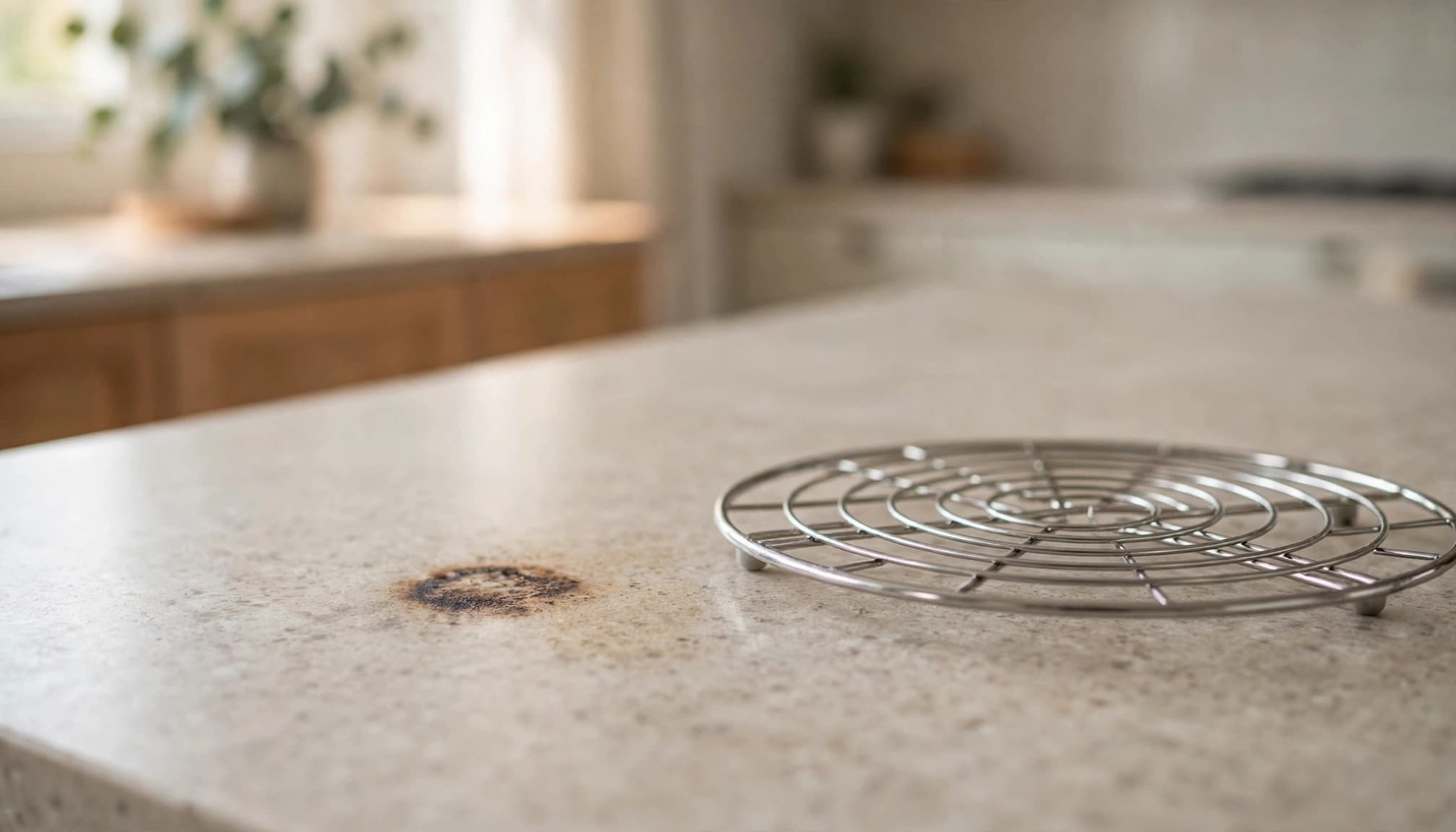
How to Prevent Another Burn Mark on Your Countertop
Use trivets and heat-resistant pads every time hot cookware leaves the stove or oven. Keep hot pans away from seams and edges, where heat and weight can cause more visible damage.
Don't place air fryers, slow cookers, curling tools, or other heated appliances directly on the surface. Check appliance heat output and follow the countertop manufacturer's care instructions. Prevention matters most for laminate and resin-based counters, and Dr. Cabinet can help renew worn kitchen and bathroom surfaces.
Frequently Asked Questions
Can a burn mark on countertop be only a surface stain?
Yes. Light brown or gray discoloration with no texture change may be a surface stain or finish damage. Clean it gently first, then reassess it in natural light.
Can I hide laminate damage with a cutting board?
A cutting board or trivet can cover a small damaged spot in a practical location. However, it won't repair bubbling, holes, or swollen substrate beneath the laminate.
Does heat damage affect countertop seams?
Heat can weaken seam adhesive or make an existing seam more noticeable. If the seam separates, feels uneven, or collects moisture, schedule an inspection.
Will a repaired countertop match the original color?
Color matching depends on the material, age, pattern, and finish. Solid colors are often easier to blend than veined stone or patterned laminate.
Are air fryer feet safe on countertops?
Air fryer feet may reduce direct contact, but the appliance still produces heat below and around its base. Place it on a heat-resistant mat, especially on laminate or quartz.
Choose the Repair Based on the Damage
Light surface marks may improve with patient cleaning and a gentle test. Deep burns, melted laminate, resin damage, and cracks often need professional repair or replacement planning.
Identify the material and damage depth before trying a DIY method. For guidance, a free estimate, or repair options, contact Dr. Cabinet at 201-212-5477 or infodrcabinet@gmail.com.


Comments
Post a Comment