How to repair drawer slides That Stick, Sag, or Slam
A drawer that scrapes every time you open it can make a simple kitchen task frustrating. If it sags or won't close, the cause may be dirt, loose screws, worn wood, or damaged hardware. The right fix depends on the slide type, which is why forcing the drawer shut often makes matters worse.
Learning how to repair drawer slides starts with a careful inspection, not a replacement order. Dr. Cabinet repairs drawers and cabinets, but many minor slide problems are manageable with basic tools. First, find out what's making the drawer misbehave.
How to repair drawer slides, starting with the cause
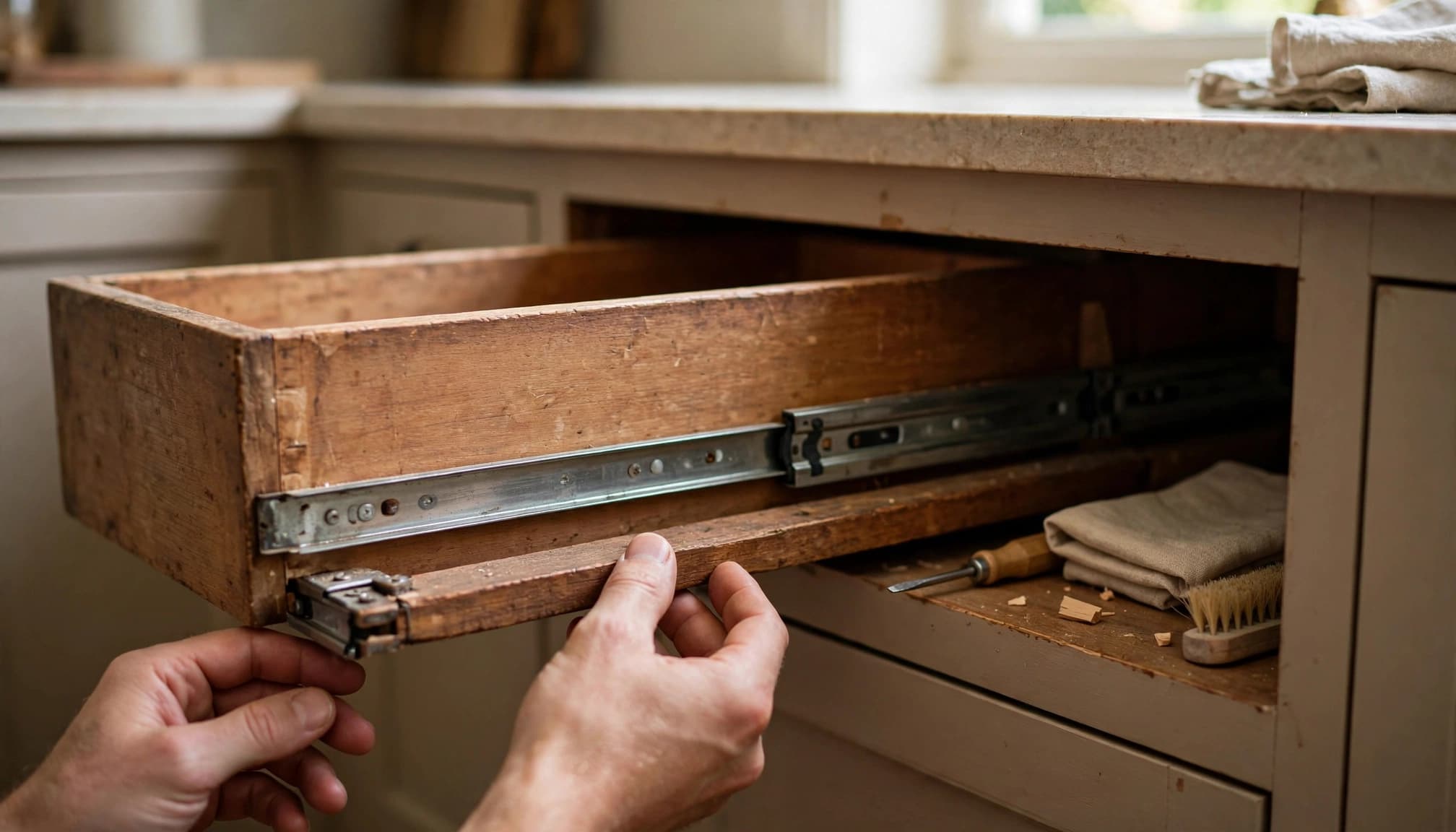
Empty the drawer before pulling it out. Support its weight as it comes free, especially if it holds cookware or files. Then inspect the hardware on both sides of the drawer and inside the cabinet. Look for debris, loose mounting screws, bent tracks, worn contact points, and cracks near the screw holes.
Check the drawer box, too. A carpenter's square against its corners can reveal a box that's no longer square. Even perfectly aligned slides may bind if the box has shifted.
Spot the problem by how the drawer moves
A drawer that sticks at one spot may have a screw head protruding into its path, a swollen wooden edge, or debris lodged in a track. Scraping along one side points toward misalignment or a drawer box rubbing the cabinet opening. If the drawer sags at the front, check for a loose slide, a worn runner, or damaged wood beneath its mounting screws.
Rough travel across the full stroke suggests dirty bearings or worn contact surfaces. Side-to-side wobbling can come from loose fasteners or an incorrect fit. A soft-close drawer that moves smoothly but slams at the end needs a closer look at its closing mechanism.
Those symptoms narrow the search, but they don't identify the part on their own. Knowing how to repair drawer slides means checking the hardware before choosing a remedy.
Tell wood runners from metal, roller, and soft-close slides
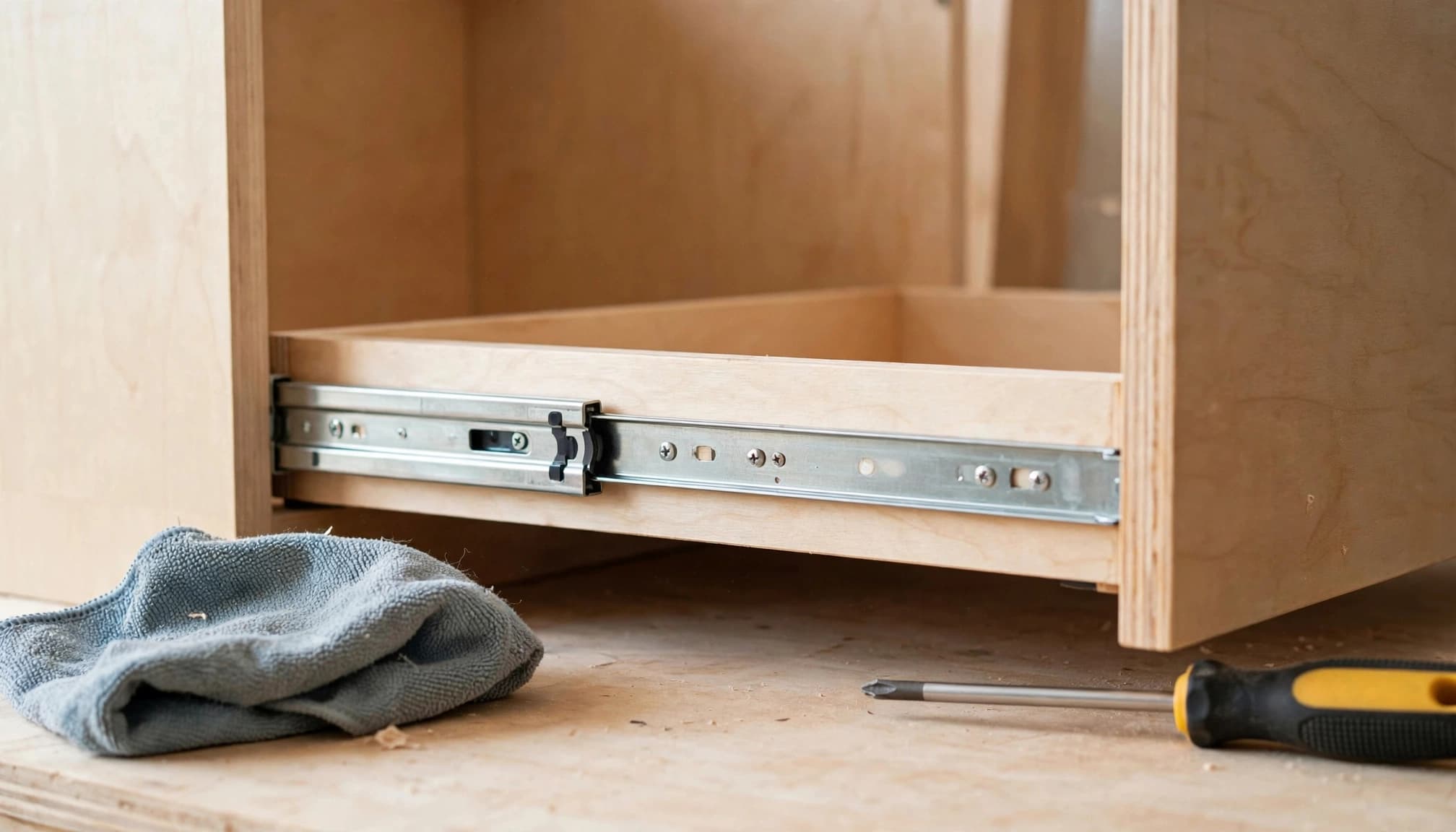
Older drawers may ride directly on wooden runners. You'll see wood-on-wood contact instead of a metal track. Side-mounted ball-bearing slides have metal members attached to the drawer and cabinet. Roller slides have visible plastic or nylon wheels that travel in a guide rail.
Soft-close slides add a mechanism that slows the drawer near the end of its travel. It may sit within the slide assembly and can be hard to spot without removing the drawer.
Some ball-bearing slides have release levers. Others use a different disconnect or don't disconnect the same way. If you find levers, release both sides while supporting the drawer. Don't tug harder to overcome resistance.
Fix common drawer slide problems with simple repairs
Gather a screwdriver that fits the screws, a cloth or vacuum, and a level or square. Keep a suitable lubricant nearby, but identify the slide before applying it. Work in order: clean, tighten, align, then repair or replace. If the drawer jams, stop and find the obstruction rather than forcing it past the damaged area.
Clean, tighten, and align the slide hardware
Vacuum loose grit from the tracks and wipe accessible surfaces. Check behind the drawer, too; an object at the back of the cabinet can stop it short. Tighten loose screws without stripping them, then compare the left and right slide positions. Both sides should sit level and run parallel through the drawer's travel. Accuride's installation guidance calls for slides to be parallel both vertically and horizontally.
If a screw spins in a stripped wooden hole, remove it and clear away loose material. For a loaded slide mounting point, a glued wood plug or dowel gives the new screw a firmer hold than filler alone. Let the repair cure, then drill a correctly sized pilot hole before reinstalling the screw. Wood filler can work for a less demanding spot, but it isn't an equal substitute where the slide carries weight.
Repair worn wooden runners and reduce friction
For a sound wooden runner that feels rough, clean it and sand only the raised or scuffed contact points. Remove a little material at a time, then test the fit. A thin coat of paraffin or furniture wax on the clean contact surfaces can help the drawer move smoothly.
If wear has cut a localized groove, a fitted hardwood patch may restore the runner's shape. Glue and clamp the patch, let it cure, and shape it flush before testing. Replace a runner that's split or deeply worn along much of its length. Dr. Cabinet can help fit a replacement when the original profile is difficult to match.
If you're learning how to repair drawer slides with wooden runners, check the drawer box before sanding more wood away. An out-of-square box will keep rubbing until you correct the box itself.
Know when metal or soft-close slides need replacement
Dirt, loose fasteners, and slight misalignment are worth fixing. A bent metal track, cracked roller, or missing ball bearings usually call for a new slide. A failed soft-close damper generally needs replacement, too, although poor seating or an available adjustment may be the real cause of a drawer that slams.
Deciding how to repair drawer slides with soft-close hardware starts with a simple test: does the drawer travel straight and freely until the closing action should begin? If so, check that it's fully engaged with the slides. Some models provide an adjustment dial or cam; follow that model's instructions if one is present. Blum's TANDEM and MOVENTO systems, for example, have model-specific adjustment features. Don't assume every soft-close slide has the same controls.
For damaged side-mounted metal slides, replacing both sides as a matched pair is sensible. That way, the drawer doesn't run on one worn slide and one new one. Dr. Cabinet can also assess whether the trouble extends beyond the hardware, such as a loose drawer front or failing cabinet mount.
Choose between repairing the slide and replacing it
A minor adjustment is usually worthwhile when the slide is straight, the mounting wood is sound, and the drawer fits its opening. Replacement makes more sense when parts are broken or repairing a worn assembly would take more work than fitting a new pair. On an older cabinet, also consider whether a replacement can be installed without weakening the existing mounting points.
Match the replacement to the drawer
Take the old slide with you when shopping, or record its type, length, and mounting position. Check whether it mounts on the side or underneath the drawer, and match its extension and load requirements to how you use the drawer. Confirm the available side clearance and screw locations against the new slide's instructions. Similar-looking slides aren't necessarily interchangeable.
Before buying hardware, inspect the cabinet and drawer box for damage. New slides won't solve a cracked mounting panel or a drawer that's out of square. If the track itself needs attention, Dr. Cabinet's guide to repairing kitchen drawer tracks offers another look at common track problems.
Keep the repaired slide working
Once the drawer runs properly, keep crumbs and dust out of its tracks. Avoid overloading it, especially with heavy cookware or stacked supplies. A quick check for loose screws can prevent the slide from shifting and wearing against the opposite side.
Use wax on appropriate wooden contact surfaces, not as a general cure for every mechanism. For metal slides, follow the manufacturer's lubrication instructions. Heavy, sticky products can hold grit where moving parts need a clean path.
Use basic safety steps and avoid common repair mistakes
An empty drawer is easier to control and less likely to drop when its release catches disengage. Support a heavy drawer from underneath, and ask for help if you can't remove it safely. Wear gloves around sharp, bent metal or when cutting away damaged wood. Keep fingers clear of moving slide members during reinstallation.
Don't remove several screws at once without noting where the slides sat. A pencil mark along each mounting position gives you a useful reference if an adjustment doesn't help. When installing a new wooden runner, drill pilot holes so its fasteners don't split the wood. Check screw length as well; a screw that passes through the cabinet side can cause damage outside the drawer opening.
Avoid soaking metal tracks with lubricant or coating wood runners in a thick layer of wax. Both approaches can collect dirt. Likewise, replacing only one side of a matched metal pair may leave the drawer moving unevenly. If a repair requires increasing force to close the drawer, stop and reassess the fit.
Test the drawer before calling it fixed
Reinstall the drawer gently and move it through its full travel several times while it's empty. Watch the gaps along the opening. The drawer should stay level, avoid scraping the frame, and close without a shove. If one side moves ahead of the other, recheck that the slides are parallel and the drawer is seated correctly.
Next, add a modest amount of its usual contents and test it again. Weight can expose a loose screw or weak mounting point that an empty-drawer test misses. For soft-close hardware, make sure the drawer enters the closing portion of its travel smoothly rather than striking the cabinet face.
Stop if you hear a new grinding sound or see a slide pull away from its mount. Repeated testing won't strengthen damaged wood, and forcing the drawer can bend otherwise usable hardware.
Call a cabinet repair pro when the cabinet itself is damaged
Slide replacement becomes a more involved job when cabinet sides are cracked, mounting holes have torn out across a wide area, or the drawer box won't hold its shape. Precise fitting also matters when an older cabinet has nonstandard dimensions or a wooden runner must be rebuilt to match its mate.
In those cases, expert kitchen drawer repair can address the drawer and its mounting surfaces together. Dr. Cabinet works on sticking, sagging, and damaged drawers, including problems that reach beyond the slides. For broader damage around the opening, its kitchen cabinet repair services cover cabinet components as well.
If the drawer still binds after careful cleaning and alignment, Dr. Cabinet can inspect the fit before more material is removed or new hardware is installed. You can call 201-212-5477 or email infodrcabinet@gmail.com to discuss the repair.
A smoother drawer starts with the right fix
Clean and align slides that are sound but dirty or loose. Rebuild a worn wooden runner when enough solid wood remains, and replace hardware that's bent or broken. After any repair, test the drawer gently both empty and loaded.
A drawer that still binds needs another look at its box and cabinet, not more force. For help with a stubborn drawer, contact Dr. Cabinet at 201-212-5477 or infodrcabinet@gmail.com.


Comments
Post a Comment