A wood restorer for furniture can save a good finish
A dull dresser or worn cabinet door can make an entire room feel neglected. The right wood restorer for furniture can reduce the look of light scratches, revive a flat finish, and bring back a gentle sheen without the cost of a full DIY refinishing project.
Still, these products have limits. They improve surface appearance, but they cannot repair broken joints, peeling coatings, deep gouges, swollen wood, or serious water damage. Dr. Cabinet helps homeowners decide when a simple refresh is enough and when furniture or cabinetry needs skilled repair.
What a Wood Restorer for Furniture Can and Cannot Fix
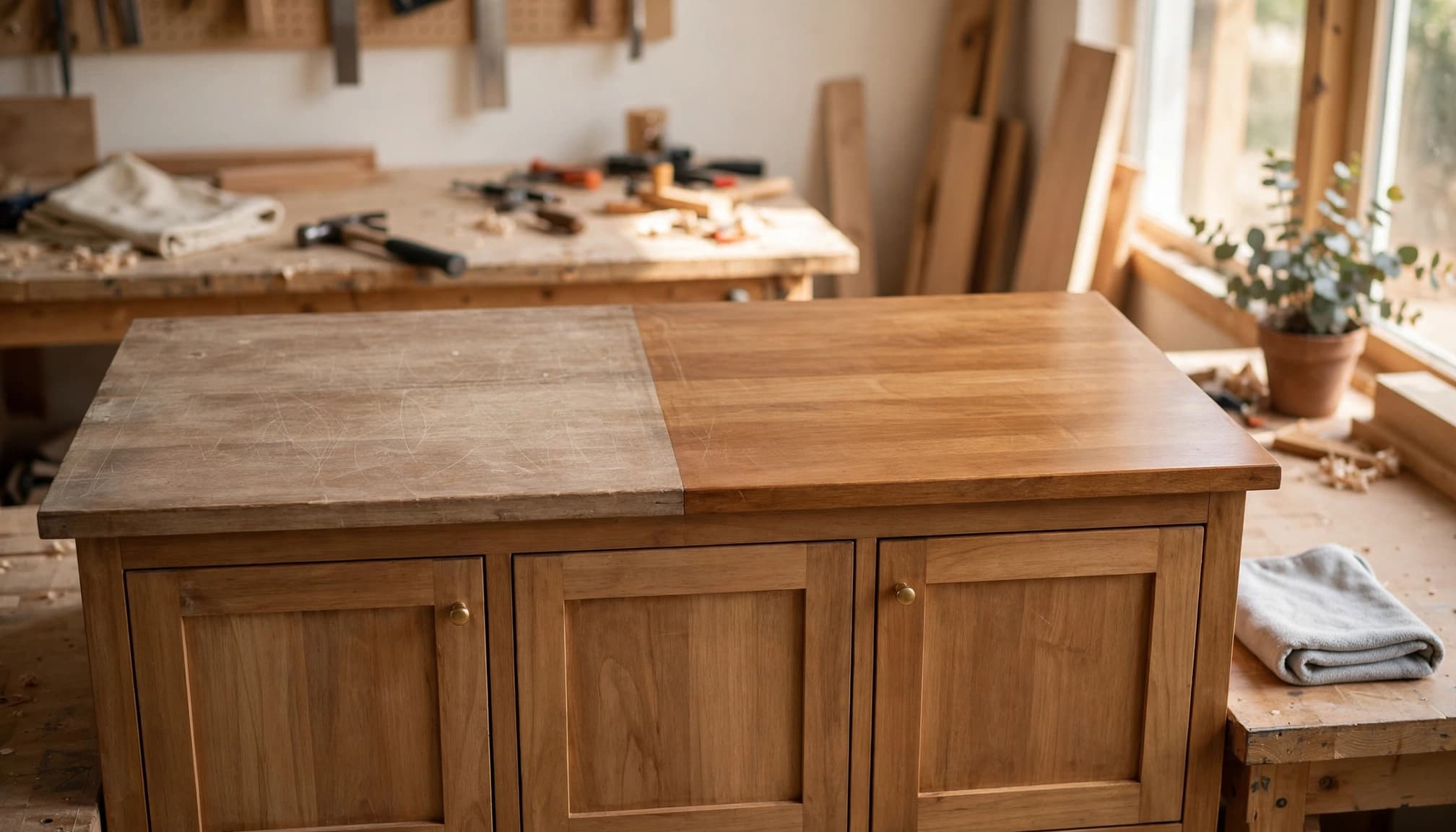
A restorer is made for finished wood with cosmetic wear. It can help blend light scuffs, soften the appearance of small scratches, clean away dull residue, and even out an inconsistent sheen.
However, a restorer is different from a cleaner, polish, refinisher, or structural repair. Cleaners remove grime. Polishes add temporary shine. Refinishing often requires stripping, sanding, staining, and sealing. Structural repair fixes the wood itself, including loose joints, damaged veneer, or cracked panels.
Common Types and Brands for Different Wood Surfaces
Product choice depends on the finish, the soil level, and the condition of the piece. No single bottle is right for every cabinet, table, or antique.
Rejuvenate Cabinet and Furniture Restorer comes in a 16-ounce pour bottle and is marketed for sealed indoor wood, laminates, paneling, cabinets, and furniture. It is a practical choice for a fast cosmetic refresh on broad, lightly worn surfaces.
Weiman Wood and Cabinet 3-in-1 Restorer Cream combines cleaning, polishing, and shine in one product. It can suit frequently touched furniture, trim, doors, and cabinet fronts that need light cleaning along with a brighter finish.
Howard Products Restor-A-Finish is often used to blend worn areas into an existing finish, especially on older wood pieces. Parker & Bailey Kitchen Cabinet Cream and Therapy Wood Polish products are better suited to routine cleaning and conditioning when cabinet doors have grease, fingerprints, or a dry appearance.
When a Surface Restorer Is Not Enough
Skip the bottle and request an assessment if you see flaking finish, deep gouges, swollen wood, missing veneer, broken joints, or large water marks. Heavy buildup, obvious color mismatch, and damage across multiple doors also call for more than a surface treatment.
A restorer can disguise light finish wear, but it cannot stabilize loose wood or replace a failed coating.
Dr. Cabinet can determine whether restoration, refinishing, repair, refacing, or replacement offers the better return for your piece. That judgment matters most for high-use cabinets and furniture with real value.
Choosing a Wood Restorer for Furniture Safely
Start with the surface itself. Most products work best on finished indoor wood, but painted cabinets, laminate, veneer, waxed furniture, and unknown finishes need extra care.
Check the label for approved surfaces, drying time, ventilation requirements, and instructions for follow-up coats. A dark product may deepen lighter wood, while a wax-containing formula can affect later refinishing work. If cabinet finishes need more than a cosmetic product, consider professional wood furniture restoration before applying several layers of store-bought treatments.
Prepare the Surface Before Applying Any Product
Dust first with a dry microfiber cloth. Next, remove grease, cooking residue, furniture polish buildup, and other grime with a cleaner suited to the finish. Let the surface dry completely.
Remove knobs, pulls, or handles when they block access to worn areas. Then test the product under a tabletop edge, inside a cabinet frame, or another hidden spot. Watch for sticky residue, unwanted darkening, streaks, and uneven shine before treating the entire piece.
Apply Thin Coats and Follow the Wood Grain
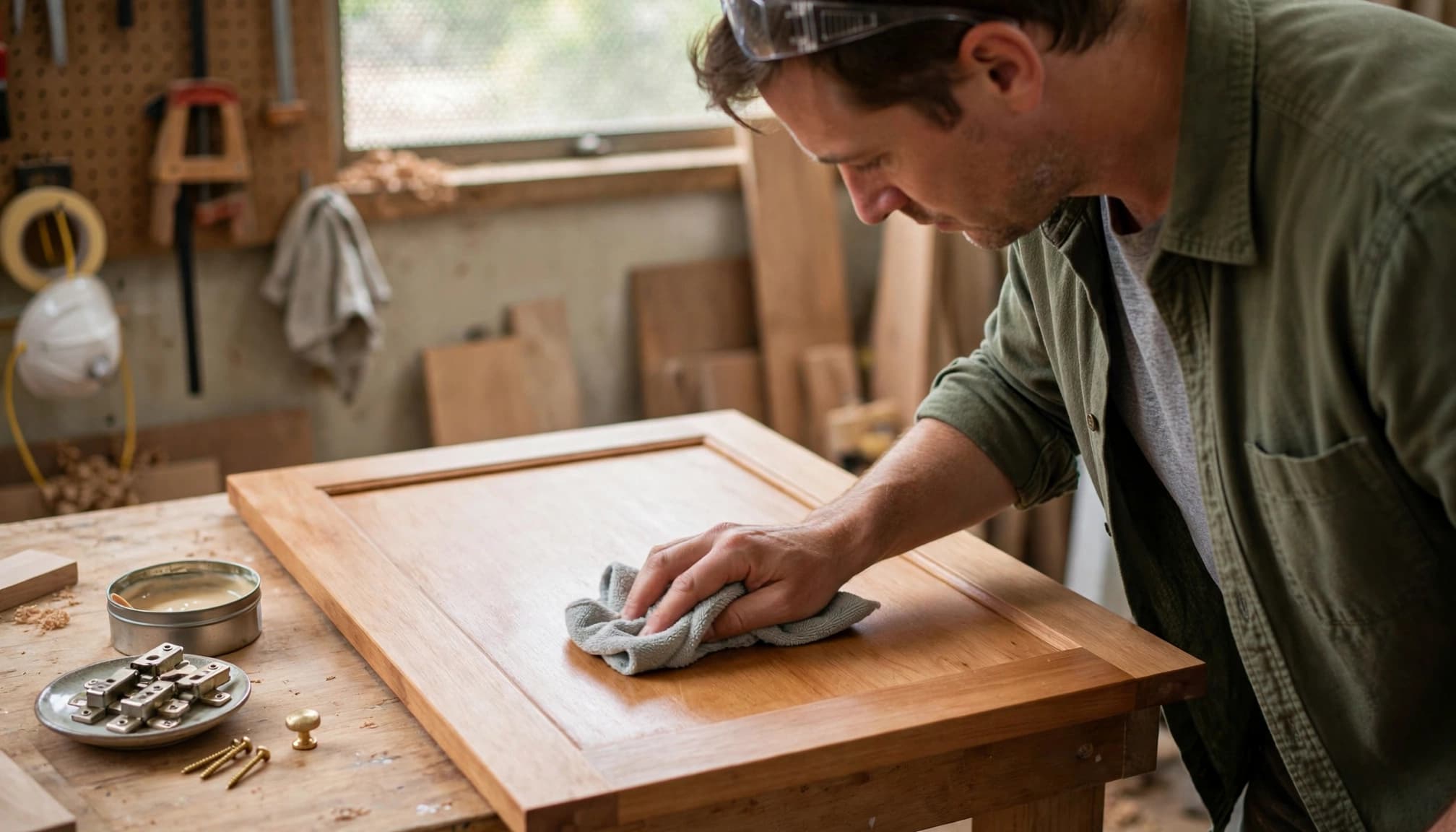
Use a clean microfiber mitt or soft cloth if the label calls for one. Apply a small amount, work in the direction of the grain, and keep the coat thin. Wipe away excess before it dries into corners or hardware holes.
Some Restor-A-Finish-style products may call for fine steel wool. Use that method only when the label approves it and only on a sturdy finish. Aggressive rubbing can scratch delicate lacquer, thin veneer, and older furniture finishes.
Use a wood restorer for furniture only as directed, then let it dry or set for the stated time. Add another coat only if the surface still needs it after the first application has cured.
Safety Rules for Cabinets, Antiques, and Oily Cloths
Open windows or work in a well-ventilated area, especially with solvent-based products. Wear gloves if the label recommends them, and keep products away from pilot lights, cigarettes, and other flames.
Never leave oil-soaked or solvent-soaked rags crumpled in a pile. Spread them out to dry outdoors if the label permits, or follow local disposal guidance. Crumpled oily cloths can trap heat and create a fire risk.
Avoid applying restorers to countertops, food-preparation areas, raw wood, or cabinet interiors unless the manufacturer clearly approves it. For painted cabinetry, laminate, thin veneer, and valuable antiques, Dr. Cabinet can help prevent an expensive mistake.
DIY Costs of a Wood Restorer for Furniture
Retail wood-care products are usually an affordable maintenance option. A single bottle costs far less than refinishing, and it may cover several cabinet doors or furniture pieces when the damage is minor.
Professional work costs more because it can include deep cleaning, finish repair, color matching, veneer work, stripping, staining, and protective topcoats. The price reflects labor and the level of correction needed, not simply the size of the item.
| Service | Typical U.S. Planning Range | What Changes the Price |
|---|---|---|
| Cabinet refinishing | $20 to $60 per linear foot | Finish type, prep work, door count |
| Cabinet repair | Often $50 to $100 per labor hour | Hardware, wood damage, access |
| Furniture refinishing | Often $400 to $1,200 for many pieces | Size, detail work, stripping, repairs |
| Larger cabinet projects | $1,500 to $4,500 or more | Scope, materials, location, labor |
Cabinet repair estimates are often quoted around $200 to $490 for common jobs, although a small hinge repair and a major water-damage repair sit at very different ends of the scale. Ask for an itemized estimate when refinishing or repairs involve multiple doors, drawers, or furniture components.
When Professional Restoration Is the Better Buy
A DIY product makes sense for mild dullness and isolated scuffs. Professional help becomes more cost-effective when damage covers many cabinet doors, the finish has failed, or color matching needs to look consistent across a room.
Dr. Cabinet handles furniture repair, cabinet restoration, refinishing, refacing, and custom improvements for residential and commercial spaces. Instead of replacing sound cabinetry because the finish looks tired, you can choose repairs that restore function and appearance.
When Hiring Dr. Cabinet Gives You Better Long-Term Value
Deep scratches can catch light differently after a cosmetic treatment. Grease may also have softened an older cabinet coating, which makes a fresh polish look blotchy rather than clean. Professional work addresses the damaged finish before adding a new protective layer.
Dr. Cabinet provides tailored solutions, free estimates, practical pricing, and warranty-focused workmanship. A technician can repair doors, drawers, hardware, vanities, closets, and furniture while preserving as much of the original material as possible.
Call 201-212-5477 or email infodrcabinet@gmail.com to discuss worn cabinets, damaged furniture, or a planned update. Dr. Cabinet can recommend the repair path that fits the condition of your woodwork and your budget.
Frequently Asked Questions
How long does a furniture restorer last?
Results vary with the product, the condition of the finish, and how often the surface is touched or cleaned. A lightly used side table may stay presentable for months, while busy kitchen cabinet doors may need regular cleaning and occasional touch-ups.
Can I use a restorer over old furniture polish?
Remove old polish, wax, grease, and dirt first whenever the product instructions call for a clean surface. Applying a restorer over buildup can trap residue and create streaks, cloudiness, or a tacky feel.
Will a restorer remove white water rings?
It may soften the look of a faint surface haze, but it cannot reliably repair moisture that has penetrated the finish or wood. Persistent white rings, dark spots, or raised grain need a closer inspection.
Can I use wood-restoring products on painted cabinets?
Only use a product if its label approves painted surfaces. Some formulas can leave painted finishes too shiny, streaky, or difficult to repaint later, especially on matte and satin cabinet coatings.
Should antiques be treated with a store-bought product?
Test a hidden spot first and avoid aggressive rubbing. Antique finishes, shellac, old lacquer, and veneer can react unpredictably, so valuable pieces deserve a careful professional assessment.
Is cabinet refacing better than refinishing?
Refinishing works best when cabinet boxes and doors are sound but the finish looks worn. Refacing replaces visible door and drawer fronts, so it can suit cabinets with dated styles but solid frames.
A Better Finish Starts With an Honest Assessment
A wood restorer for furniture is a useful answer to dullness, light scuffs, and uneven shine. Clean the surface, test a hidden area, and apply thin coats so the product improves the finish instead of masking a deeper issue.
When the damage is widespread, structural, or on a valuable piece, repair work often makes more sense than another layer of polish. Dr. Cabinet can help restore furniture and cabinetry without rushing into replacement.
For a free estimate, call 201-212-5477 or email infodrcabinet@gmail.com.


Comments
Post a Comment