Kitchen Drawer Track Repair: Stop Sticking and Sagging
A kitchen drawer that sticks, sags, or slips off its track often needs loose screws tightened or slides realigned. If you're learning how to fix kitchen drawer track problems, inspect the hardware before buying replacements.
Bent rails, worn mechanisms, and damaged mounting areas need more than a quick adjustment. At Dr. Cabinet, we recommend separating those problems from simple fastening issues before starting repairs.
The safest approach is to empty the drawer, support it during removal, and inspect both sides. Start by identifying what moved, loosened, or broke.
How to fix kitchen drawer track problems: find the cause first
Unload everything, including organizers that could shift during removal. Then open the drawer slowly and notice where it catches. Uneven gaps around the drawer front can help you locate a sagging or misaligned side.
Support the drawer's weight before operating any release. Depending on the model, the slides may use levers, tabs, clips, or stops. Follow that slide's removal instructions rather than pulling harder when it stops.
Place the removed drawer on a stable surface. Keep loose fasteners together so they don't disappear during inspection.
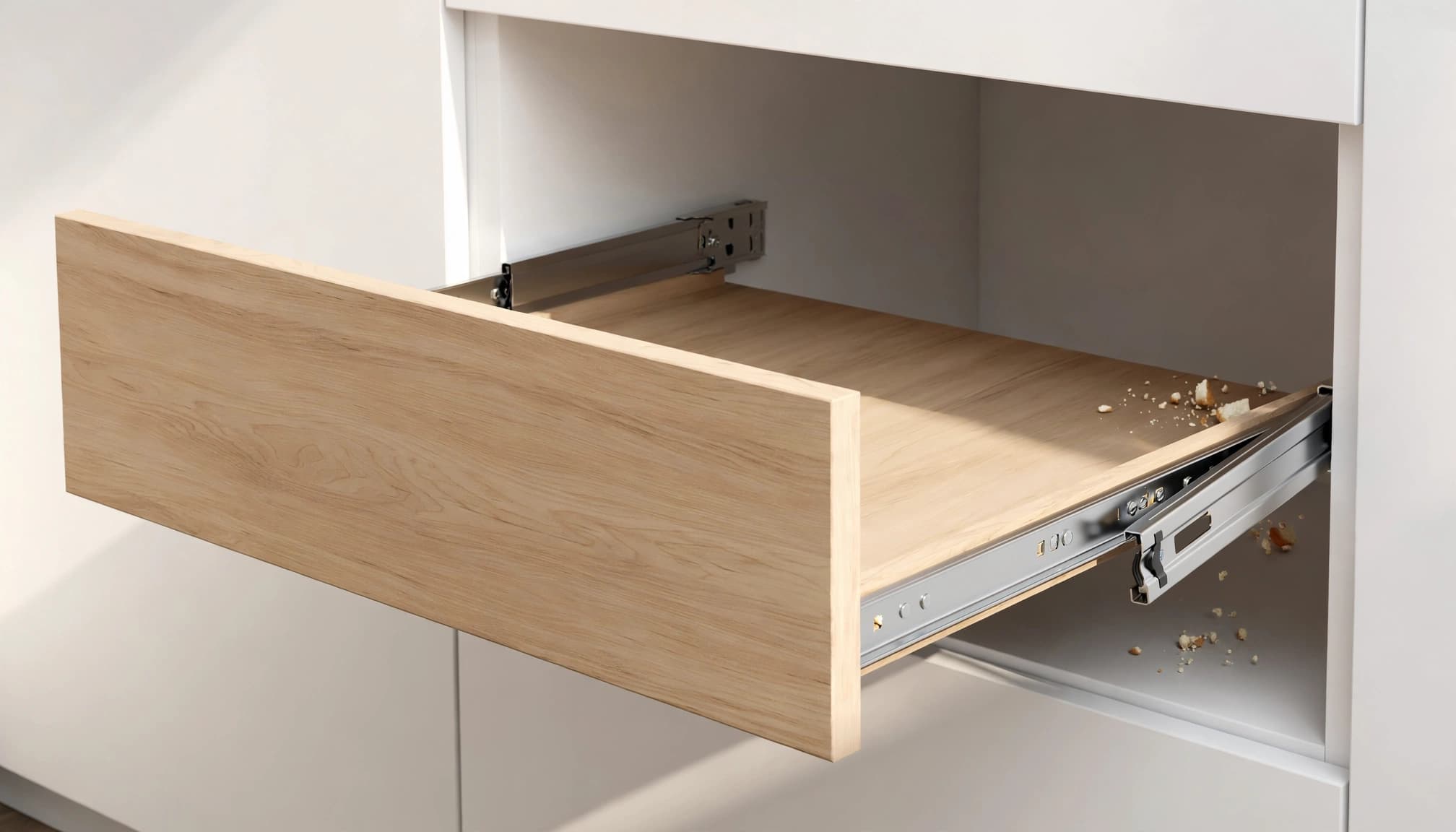
Check the drawer slides and cabinet for loose or damaged parts
Inspect the hardware attached to the drawer and inside the cabinet. Look for missing screws, debris, visible bends, worn rollers, and damaged bearing mechanisms. Also examine the wood around each mounting hole.
A screw that turns without tightening may have lost its grip. Meanwhile, a loose rear bracket or weakened cabinet side can let an otherwise intact slide shift under load. Secure mounting surfaces matter as much as straight rails.
Compare both slides for matching type and length. They should form a matching pair and sit parallel. Also inspect the drawer box and cabinet opening for loose joints or an out-of-square shape.
Identify the slide type before making adjustments
Side-mount slides attach along the drawer sides and cabinet interior. Undermount slides sit beneath the drawer and can use securing devices near the drawer's front underside.
Their release methods, clearances, and installation steps differ. For example, Blum MOVENTO systems use orange release levers, but that detail doesn't apply to every undermount system.
Look for manufacturer or model markings and photograph the installation before taking anything apart. Include the front attachments, rear supports, and screw positions. Those photos preserve useful references if a bracket shifts or you need replacement hardware.
Fix a kitchen drawer track with simple alignment and fastening steps
If the rails and mounting surfaces are intact, begin by clearing crumbs and loose debris. Wipe accessible surfaces with a dry cloth, keeping fingers away from pinch points.
Next, tighten visibly loose fasteners with a screwdriver that fits their heads. Stop if a screw spins without gripping. Repeated tightening won't restore damaged wood.
When you're working out how to fix kitchen drawer track problems, change one thing at a time. That makes it easier to identify which adjustment improves movement.
Realign the slides and tighten the mounting screws
Check that the cabinet slides sit level, parallel, and at matching positions on both sides. Compare their height and front-to-back placement. The drawer-mounted members also need matching positions.
For slides with slotted mounting holes, loosen the appropriate screws slightly so you can make a small adjustment. Keep the rail supported, reposition it, and snug the screws before testing.
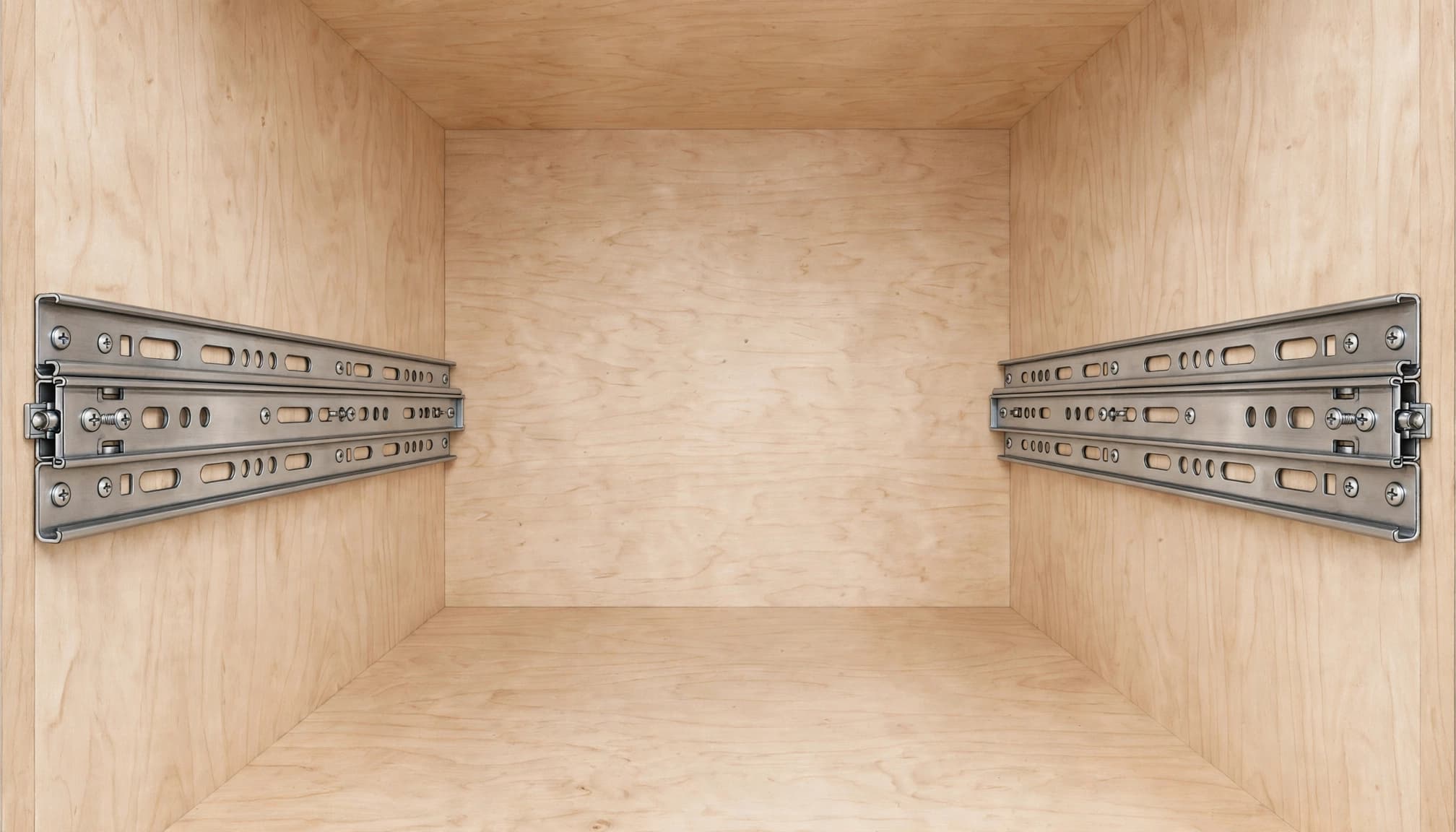
Correct side clearance matters because a drawer can bind even when both rails look level. Use the model's installation instructions for its required clearance and fastening locations.
Accuride's installation guidance uses slotted holes for adjustment and round holes for final fixing. Follow the selected model's fastening sequence after alignment is correct.
Tight screws won't correct a rail mounted in the wrong position. Align the pair before completing the final fastening.
Test the drawer before loading it again
To fix a kitchen drawer track successfully, reinstall the drawer level and engage both sides using the slide's installation method. Then open and close it slowly several times.
Watch for binding, wobble, scraping, or one side moving ahead of the other. Also check whether the drawer front closes evenly against the cabinet.
If movement still feels rough, stop and recheck the alignment. Don't push through resistance. Once the empty drawer operates smoothly and the fasteners are secure, return its contents gradually without exceeding the slide's load rating.
Know when to replace the slides or call for kitchen drawer repair service
Knowing how to fix kitchen drawer track problems also means recognizing when adjustment won't hold. Bent or broken rails, damaged mechanisms, and incompatible slides usually need replacement.
Weak mounting areas need repair before replacement hardware goes in. Otherwise, the new slides can loosen in the same places.
At Dr. Cabinet, our expert kitchen drawer repair service addresses sticking drawers, damaged slides, and related drawer problems.
Choose replacement slides that fit your drawer and cabinet
Slide length alone doesn't establish compatibility. Measure the drawer box's length and width, the cabinet opening, and the available depth. Then determine the clearance required by the replacement model.
For a centered side-mount drawer, subtract the drawer width from the opening width and divide by two. Accuride illustrates this with a 24-inch opening and a 23-inch drawer, which leaves 1/2 inch per side. That calculation describes available space, not every slide's required clearance.
Compare mounting type, extension, load capacity, drawer-width limits, and mounting orientation. Full-extension slides allow the drawer to travel the full slide length; three-quarter-extension models leave part inside.
Undermount systems can also require particular drawer dimensions and cutouts. Match those requirements before ordering, and choose replacement slides as a compatible pair.
Decide whether a DIY repair is enough
A DIY adjustment is reasonable when the hardware is intact, screws hold securely, and gentle testing restores even movement. Keep the drawer unloaded until those conditions are met.
Professional help makes sense when rails are broken, the mounting surface is weak, or the same fault returns after adjustment. If the cabinet side has split or crumbled, kitchen cabinet repair may be needed before slides will hold.
You don't need to keep experimenting with a drawer that feels unsafe to remove. Contact Dr. Cabinet at 201-212-5477 or infodrcabinet@gmail.com for help with the repair.
Frequently Asked Questions
Why does my kitchen drawer keep coming off its track?
A loose fastener, poor alignment, or damaged slide can let the drawer disengage. A drawer that's too wide for its slide setup can also move unevenly from side to side. If the problem returns after reseating it, inspect the mounting points and compatibility rather than repeatedly pushing it back into place.
Can I fix a bent drawer slide?
A bent rail can continue catching even after an attempt to straighten it. Replacing the damaged slide pair is usually the better choice for dependable movement. Keep the drawer unloaded if the damaged rail no longer supports it securely.
How do I remove a kitchen drawer with slides?
Support the drawer and use its model's release tabs, levers, or stops. Some systems disconnect differently on each side, so don't assume both releases move in the same direction. Use the manufacturer's removal instructions and stop if the drawer remains caught.
How do I know what size drawer slides to buy?
Measure the drawer box's length and width, cabinet opening, available depth, and side clearance. Then match those dimensions to the replacement's mounting type and installation requirements. Keep a photo of the existing model marking because nominal length alone doesn't identify a compatible replacement.
Should I replace one drawer slide or both?
Replace both sides as a matching pair when a slide has failed or compatibility is uncertain. Mixing different mechanisms, lengths, or worn and new components can produce uneven movement. Also inspect the mounting areas before installing the new pair so the original cause doesn't remain.
When should I call a kitchen drawer repair professional?
Call when binding returns, hardware breaks, mounting areas deteriorate, or removal feels unsafe. Help is also useful when you can't identify a compatible replacement. If you're unsure how to fix kitchen drawer track problems without damaging the cabinet, Dr. Cabinet can help with the repair.
Get the Drawer Moving Smoothly Again
The answer to how to fix kitchen drawer track problems begins with inspecting both slides and their mounting surfaces. When parts are intact, clear debris, correct alignment, and secure loose fasteners before testing gently.
Replace damaged or unsuitable hardware with a compatible pair, and repair weakened mounting areas before installing it. A drawer should open evenly without force before you load it again.
For recurring problems or damaged components, contact Dr. Cabinet rather than repeating an adjustment that won't hold. A reliable repair addresses the reason the drawer stopped moving correctly.


Comments
Post a Comment