Cabinet Hinge Repair Guide to Fix Loose, Broken & Misalignment
A cabinet door that sags, sticks, or won't close often needs a targeted repair rather than a replacement cabinet. The fix usually involves tightening loose screws, restoring a damaged screw hole, adjusting an intact hinge, or replacing broken hardware.
At Dr. Cabinet, we recommend identifying the source of movement before changing anything. A screw that won't grip needs a different repair than a firmly attached hinge holding the door unevenly.
Use our Cabinet Hinge Repair Guide to separate these problems and choose a practical next step. Start by supporting the door and inspecting its attachments, because even a small adjustment becomes harder when the door's weight pulls against loose hardware.

Cabinet Hinge Repair Guide: Find the Cause Before You Start
Open the door slowly and look for movement where the hardware attaches. Watch whether a screw shifts, the hinge moves against the cabinet, or the surrounding material crumbles. Don't pull hard on a loose door to test it.
Separate loose hardware from damaged material
A loose screw may tighten normally and hold the hinge firmly again. A stripped hole behaves differently: the screw turns without becoming snug, falls out, or loosens again after the door moves.
Also inspect the hinge itself. Bent metal, a cracked component, or an arm that no longer moves properly points toward replacement. However, replacing hardware won't restore strength to a broken mounting area.
If the attachments remain firm but the door rubs or leaves an uneven gap, alignment may be the problem. Look at the cabinet panel too. Swelling, splitting, or missing material can prevent a lasting repair.
Gather the right tools and support the door
For an initial inspection, gather a matching hand screwdriver, a flashlight, and a container for removed screws. Use a screwdriver tip that fits closely; a poor fit can damage the screw head.
A more involved repair may require a drill, suitable bits, replacement screws, and tape to mark drilling depth. Only drill when you can control the depth without breaking through the panel.
Keep the door supported throughout the work. Ask another person to hold a heavy or awkward door, and keep fingers away from the hinge joint. If you can't support it securely, stop and arrange help from Dr. Cabinet rather than loosening more hardware.
Fix Loose Cabinet Hinges and Stripped Screw Holes
Begin with the least invasive fix. Keep this Cabinet Hinge Repair Guide handy as you work, but stop tightening whenever a screw turns without gaining a firm hold.
Tighten loose screws without damaging the cabinet
Support the door, seat the screwdriver fully, and tighten an accessible loose screw slowly by hand. Stop when the attachment feels secure. Extra force can damage the screw head or strip the material surrounding it.
Then move the door gently while watching the repaired connection. If the hinge stays in place, check the other attachments before attempting alignment.
A screw that spins freely or falls out again needs more than another turn. Avoid repeatedly forcing it back into the same hole. Also resist installing a longer screw without considering the panel thickness; it could break through the opposite face.
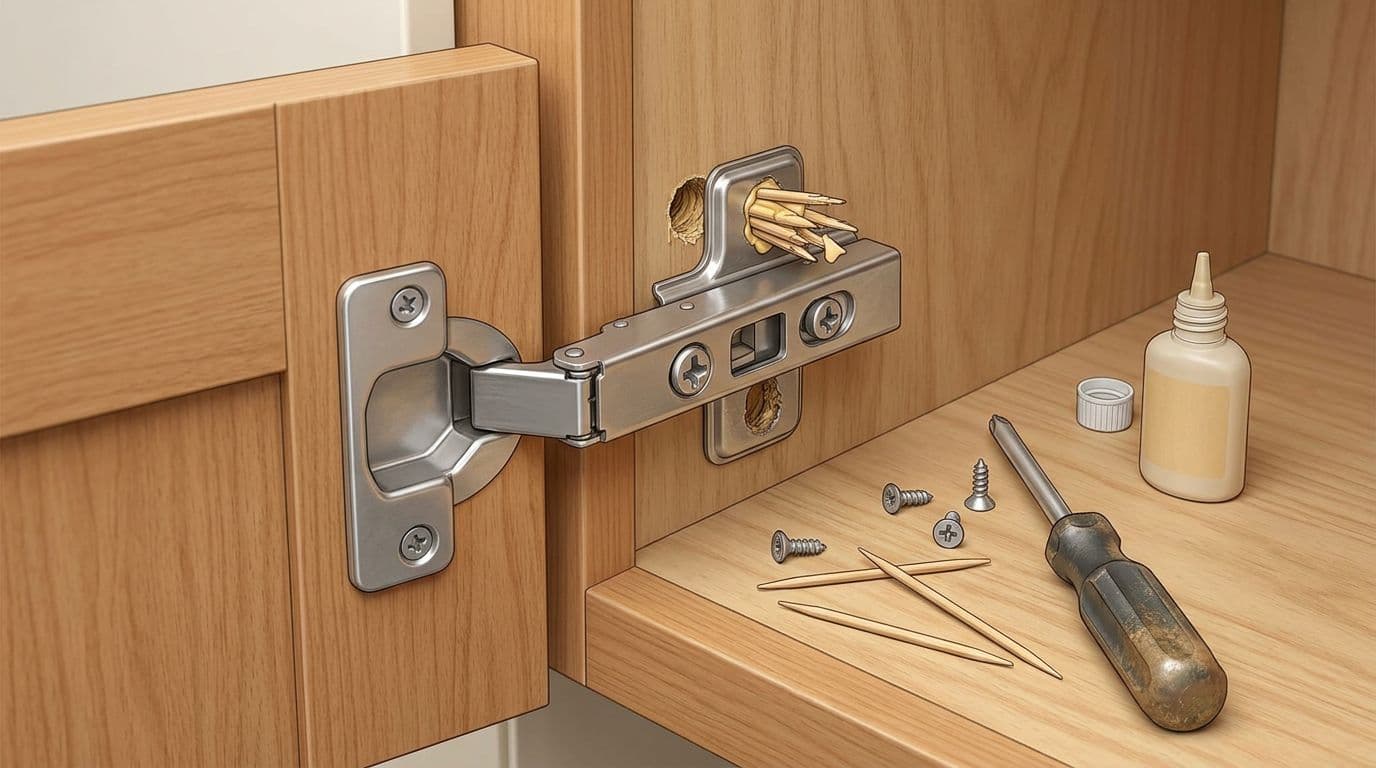
Restore a damaged screw hole with wood or a repair plate
A damaged hole needs a firm attachment point before the screw can carry the door's weight again. The appropriate repair depends on how much material remains and whether the surrounding panel is sound.
Wood repair and a compatible hinge repair plate are options for damaged mounting areas. However, a plate needs sound material around the damage for its fasteners. It can't compensate for an extensively crumbled panel.
Don't treat a small stripped hole and a large torn-out section as the same job. Missing chunks, cracks, or several failed attachment points call for a broader repair assessment.
Our kitchen cabinet repair service addresses loose hinges and damaged mounting areas when tightening alone won't hold.
Adjust a Misaligned Cabinet Door for Even Gaps
An intact, firmly attached hinge may need adjustment when a door rubs, hangs unevenly, or doesn't sit correctly beside its neighbor. Before using the alignment advice in this Cabinet Hinge Repair Guide, make sure the attachments no longer shift.
Establish what needs to change
Close the door gently and study its position. Compare the gap above and below it, the space beside neighboring doors, and whether its face sits evenly against the cabinet.
Look for contact marks where the door rubs. These give you a useful reference when judging whether a change helped. Also remove anything inside the cabinet that blocks closure before blaming the hardware.
Adjustment arrangements vary by hinge model. Don't assume that every visible screw changes alignment. Some screws secure the hardware, and loosening them without supporting the door can create a new problem.
Make small changes and reassess the fit
When you know the correct adjustment point for your hinge, make one small change. Then close the door gently and compare its position with your starting reference.
Avoid changing several settings at once. Otherwise, you may improve one gap while creating contact somewhere else, with no clear way to identify which change caused it.
If the door keeps dropping after adjustment, return to the attachments. A connection that moves under load needs repair before alignment can last.
For doors that remain uneven, our cabinet door adjustment service at Dr. Cabinet addresses the fit without assuming the entire cabinet needs replacement.
Replace a Broken Hinge or Call for Cabinet Repair
Adjustment won't straighten a bent hinge, mend a broken component, or make a screw grip damaged material. Once you've checked the mounting areas, replace hardware that can't hold or move the door properly.
Choose a matching hinge and install it safely
Match the existing hinge type, cup, mounting arrangement, opening style, and screw locations. Similar-looking hinges aren't necessarily interchangeable, so keep the original hardware available for comparison.
Consider how the door sits against the cabinet as well. A replacement that changes that relationship may leave the door poorly positioned even when the screws line up.
Support the door before removing the old hinge. Keep it supported while positioning the replacement and fastening it securely. Don't leave its weight hanging from a partly attached hinge.
After installation, move the door gently and assess its fit. Remember that new hardware won't repair stripped holes or weak cabinet material beneath it.
Know when a professional repair is the safer choice
Get help with heavy doors, badly damaged mounting areas, uncertain hinge compatibility, or alignment problems that repeatedly return. Several failed connections can leave a door unstable even when one screw still appears secure.
Repair is worth considering before replacing an otherwise usable cabinet. The decision should reflect the condition of the door and cabinet structure, not only the appearance of the hinge.
At Dr. Cabinet, we offer professional cabinet repair services and free estimates. Call 201-212-5477 or email infodrcabinet@gmail.com for help deciding whether the problem needs mounting repair, replacement hardware, or further cabinet work.
Test the Repair Before Returning to Everyday Use
A door that looks straight while standing open still needs a gentle operating check. Keep supporting it during the first movements, especially after replacing hardware or repairing an attachment.
Open and close the door slowly through its normal movement. Watch the repaired area rather than looking only at the outside gap. The hinge should stay attached without lifting, shifting, or pulling against visibly damaged material.
Then check the door beside neighboring doors. It should close without rubbing an adjacent edge or needing an extra push. Don't slam it to judge whether the repair holds.
A door that becomes straight during adjustment but sags again after a few movements may still have an attachment problem.
If movement returns, stop and identify where it starts. Repeated tightening can enlarge an already damaged hole, while further adjustment can hide the underlying problem temporarily.
Also look at the opposite face of the panel after any drilling or screw replacement. A new bulge, split, or exposed screw tip means the repair needs attention before normal use continues.
For future maintenance, respond when a door first begins rubbing or loosening. Supporting it during inspection and addressing a minor problem early can prevent additional strain on the remaining attachments.
Once the repair holds and the door operates normally, remove your temporary support. Keep the original hinge or its identifying information if you installed a replacement. That makes matching the hardware easier if another hinge on the same cabinet later needs attention.
Choose the Repair That Matches the Damage
Use this Cabinet Hinge Repair Guide to distinguish a loose fastener from a damaged attachment or broken hinge. Tighten screws that still grip, repair stripped mounting areas, adjust intact hardware, and replace components that no longer work properly.
Stop if the panel is damaged or the door is difficult to support. A lasting repair needs solid mounting material, not repeated tightening or a replacement hinge attached to the same weak spot.
Contact Dr. Cabinet for help or a free estimate at 201-212-5477 or infodrcabinet@gmail.com. We'll help you address the hinge problem and consider repair before replacing the cabinet when practical.


Comments
Post a Comment