How to Fix a Door Hinge: Essential Tips for Smooth Operation
Squeaks, sagging, loose screws, and sticking often improve with tightening, screw-hole repair, or suitable hinge lubrication. The right repair depends on whether the problem involves loose hardware, damaged wood, or a worn hinge.
Learning How to Fix a Door Hinge starts with finding that cause before removing anything. At Dr. Cabinet, we favor repairing usable cabinetry and hardware when practical, while recognizing when replacement makes more sense.
Start with a careful inspection, then make the smallest adjustment that addresses the problem.

How to Fix a Door Hinge for Smooth, Quiet Operation
Open the door slowly and watch each hinge. Look for screw heads that rise above the hinge leaf, movement between the leaf and wood, or uneven clearance around the door.
A squeak usually points toward friction. A door that drops when opened suggests loose hardware or worn components. However, rubbing can also come from swelling or a misaligned frame, so lubrication won't solve every problem.
Gather the Right Tools and Protect the Door
Have a correctly sized screwdriver, a drill with suitable pilot bits, wood glue, wooden toothpicks or a fitted dowel, and a compatible hinge lubricant nearby. Add a cloth to catch residue and a small wedge or other stable door support.
Use the screwdriver for initial tightening because it gives you better control than a powered driver. A poorly fitting bit can damage the screw head before the fastener becomes secure.
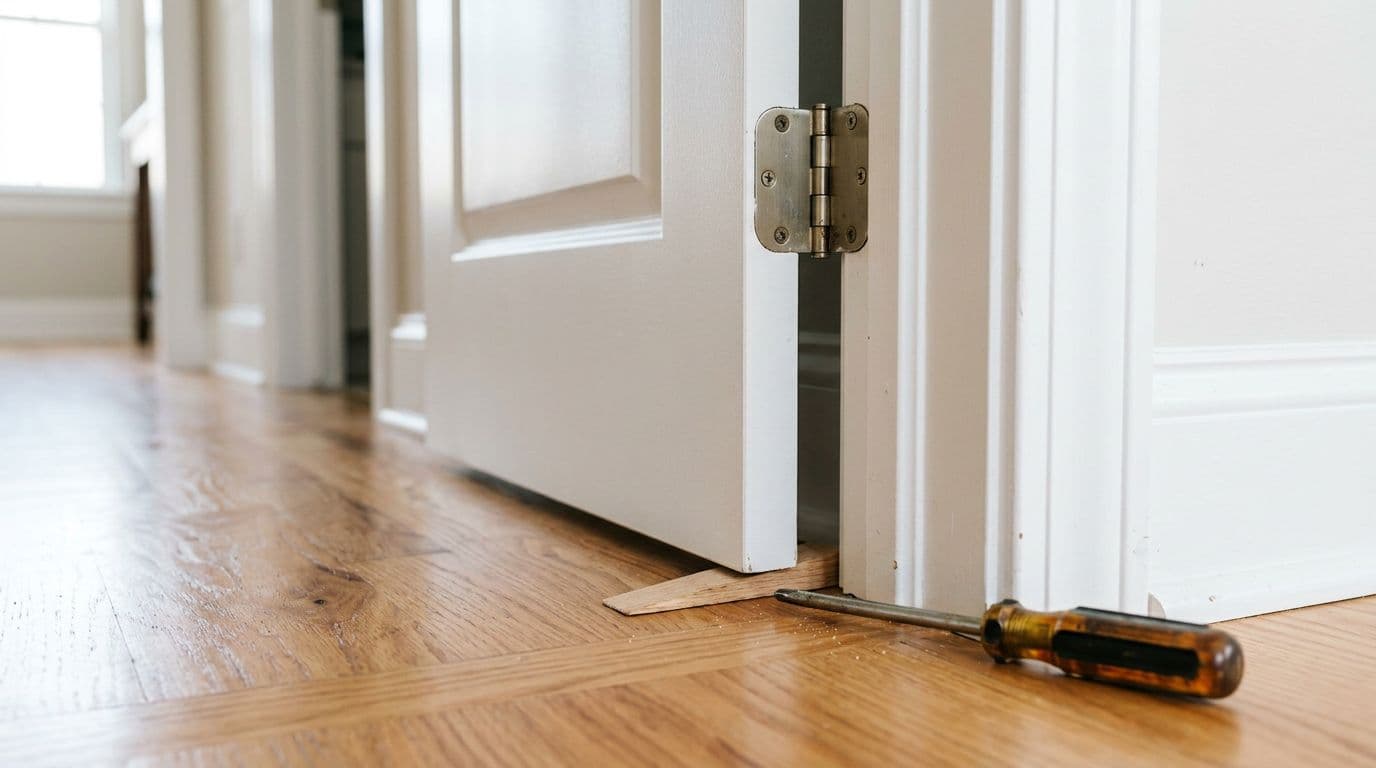
Support the door's weight before removing screws. Slide the support beneath the bottom edge without lifting the door out of alignment. For a heavy door, have a helper steady it.
Work on one hinge at a time. Never remove every hinge screw while relying on the remaining hardware to hold an unsupported door. Keep children and pets away from the work area.
Tighten Loose Screws and Repair Stripped Holes
Tighten each loose screw slowly until its head sits flush and the hinge leaf stays still. Stop when the screw feels secure. Extra force can strip the wood or deform the hinge's position.
If a screw spins without tightening, remove it and inspect the hole. For a small stripped hole in otherwise sound wood, use this sequence:
- Support the door, remove the affected screw, and clear loose material from the hole.
- Coat wooden toothpicks with wood glue and fit them snugly into the opening. For a larger hole, use a properly fitted wooden dowel.
- Allow the glue to cure according to its label before loading the repair.
- Trim the wood flush, drill an appropriately sized pilot hole, and reinstall the screw by hand.
Our Dr. Cabinet cabinet hinge repair guide covers similar loose-fastener repairs for cabinet doors. However, crumbling particleboard, split jambs, and heavy entrance doors need a different assessment.
A longer jamb-side screw may reach sound framing behind a wood door jamb. For example, an Everbilt hinge screw kit includes 1-inch and 2-1/4-inch screws for loose or sagging doors. Use the correct head size, account for concealed utilities, and stop if tightening starts pulling the jamb out of position.
Fix Squeaks, Sticking, and a Sagging Door
For squeaks, clean dirt from the hinge barrel first. Then apply a small amount of compatible hinge lubricant where the hinge sections rotate around the pin. Protect nearby paint and flooring, move the door several times, and wipe away excess.
WD-40's squeaky hinge lubrication guidance identifies a Specialist Anti-Friction Dry PTFE Lubricant among its options. Use a product labeled for the hinge material and application.
If the hinge has a removable pin, follow its design rather than forcing it out. Some security hinges have fixed or retained pins. Natural Handyman's hinge lubrication instructions describe lubricating the pin and interlocking hinge sections.
For sticking, inspect whether the hinge leaves sit flat in their recesses. Raised screws, debris beneath a leaf, or bent metal can interfere with closing.
For sagging, address loose screws first, particularly at the top hinge. If the door still drops despite secure fasteners, inspect for hinge wear or damaged wood instead of tightening harder.
Check the Hinge Type and Know When to Replace It
When deciding How to Fix a Door Hinge, distinguish a room-door butt hinge from a concealed cabinet hinge. Their mounting arrangements and adjustment methods differ.
A standard butt hinge has two flat leaves joined around a pin. Concealed cabinet hinges usually include an arm and mounting plate, often with separate adjustment screws. Don't apply cabinet adjustment instructions to a conventional interior door hinge.
Match the Replacement Hardware Carefully
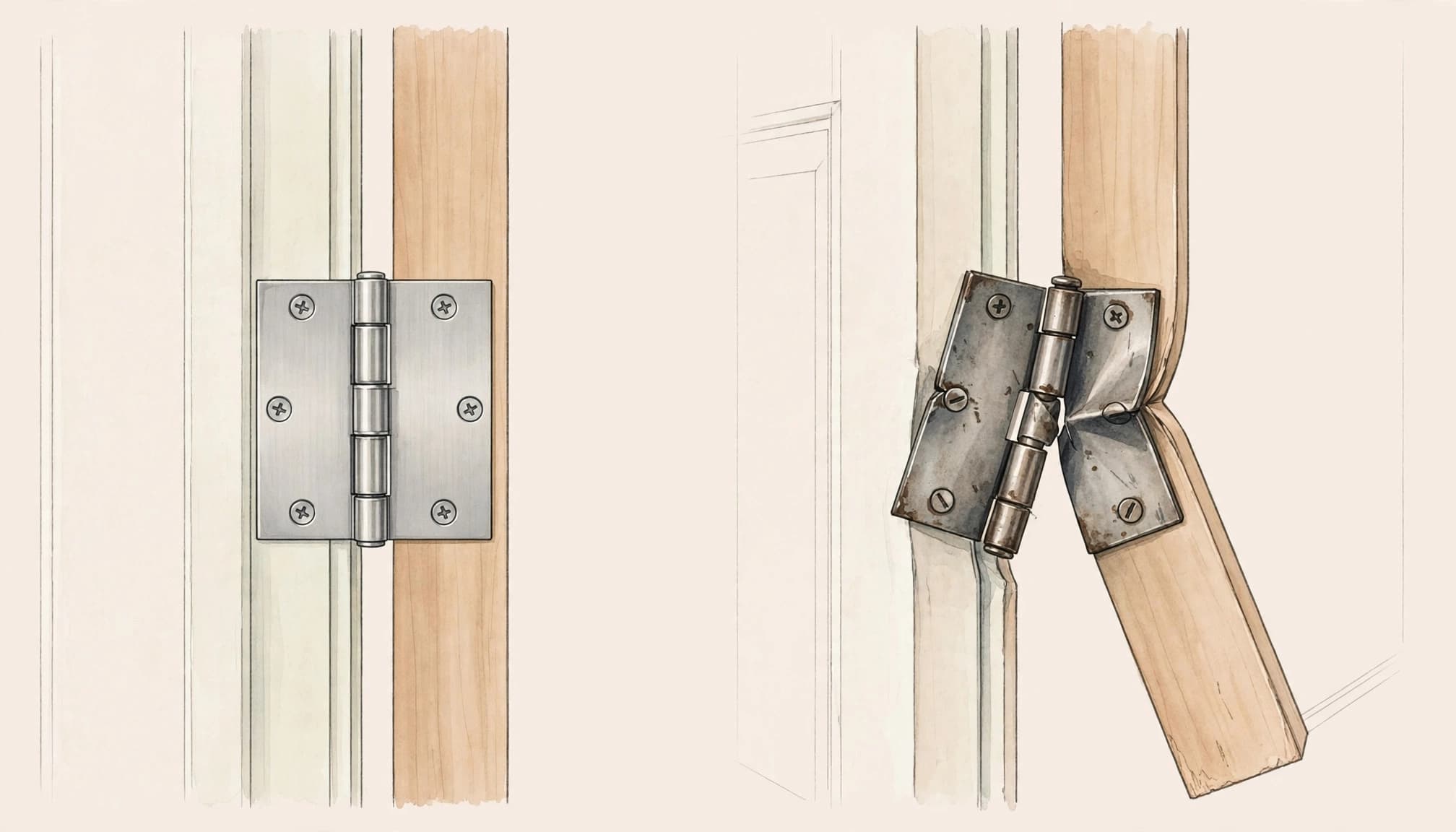
Replace a hinge that is cracked, visibly bent, severely corroded, or loose at its joints despite secure mounting screws. Surface discoloration alone doesn't establish failure, but damaged metal or excessive movement deserves attention.
Match the replacement's height, width, thickness, corner shape, and screw pattern. Also match its finish and suitability for the door's weight. A hinge that looks similar can still place the pivot differently or sit incorrectly in the existing recess.
Square corners and rounded corners aren't interchangeable without changes to the recess. Likewise, a thicker leaf can alter the gap between the door and jamb.
Keep the door supported and replace hinges one at a time to preserve alignment. Install each replacement securely before moving to the next hinge. Avoid forcing screws into misaligned holes because that can shift the hardware or weaken the wood.
For fire-rated doors, spring hinges, and unfamiliar security hardware, leave replacement to a qualified professional. Those assemblies involve requirements beyond an ordinary interior door repair.
Test the Repair and Make Small Adjustments
Open and close the door several times after each repair. Listen for squeaking, feel for resistance, and watch whether the latch enters the strike plate without lifting or pushing the door sideways.
Next, examine the clearance along the top and both sides. The gap should remain reasonably consistent for that door and frame. A narrowing gap near one upper corner can help identify where the door is dropping or rubbing.
Make small adjustments and test again. Keep screw heads flush without crushing the wood or distorting the hinge leaf. For adjustable cabinet hinges, our cabinet door repair guide explains the separate alignment approach.
A door that closes only when you lift the handle still has an alignment problem, even if the squeak has stopped.
Don't plane or sand the door immediately after tightening a hinge. First establish whether the hardware now holds the door correctly. Removing wood too early can leave an unnecessary gap once the underlying problem is repaired.
Avoid Repeat Hinge Problems and Get Help When Needed
Knowing How to Fix a Door Hinge also means recognizing when the mounting surface can no longer hold it securely. Repeated screw loosening, split wood, or a hinge pulling away from the frame calls for more than another turn of the screwdriver.
At Dr. Cabinet, our repair guidance centers on preserving usable cabinets while addressing the actual failure. That distinction matters because an adjustment won't restore deteriorated material.
Maintain the Hardware and Recognize Larger Problems
During regular cleaning, wipe dust and grime from exposed hinge areas. If a door begins moving differently, inspect it before the latch or hinge screws experience more strain.
Use lubricant when friction or the hardware manufacturer's maintenance instructions call for it. Applying more product won't correct loose screws, a bent hinge, or a door pressing against its frame.
Avoid hanging heavy bags or organizers on a door unless the door and hardware are designed for that load. Also address repeated slamming, since impact can loosen fasteners and damage surrounding material.
Professional help makes sense when a repair involves a heavy door, persistent sagging, damaged framing, or wood that no longer holds screws. A door with secure hinges that still rubs may have a frame or moisture-related problem.
Stop using a door if a hinge is pulling free or the door seems unstable. Keep the area clear until someone can support and repair it safely.
For cabinetry, repeated mounting failures can require rebuilding the attachment area or replacing damaged components. Our cabinet repair guide explains repairs beyond routine hinge adjustments.
Contact Dr. Cabinet for Repair Guidance
For a loose cabinet door, damaged hinge mounting area, or cabinet alignment problem, we can help you consider repair options. Our services include cabinet repair and installation, with free consultations and estimates.
Contact Dr. Cabinet at 201-212-5477 to discuss your cabinet repair needs. Describe whether the door squeaks, sags, rubs, or has screws that won't stay tight.
It also helps to explain whether the problem involves a concealed cabinet hinge or another cabinet hardware style. Clear information helps us understand whether the likely issue concerns the hinge, its mounting points, or the cabinet itself.
For a room door with damaged framing or a heavy entrance door, choose a professional equipped to assess that door assembly.
Restore Smooth Movement by Fixing the Cause
Understanding How to Fix a Door Hinge helps you choose between tightening, repairing the mounting hole, lubricating, adjusting, and replacing damaged hardware. Each repair should address the cause you identified.
Start by supporting the door and inspecting the hinges while it moves. Then complete one repair at a time and test the result before making another change.
A quiet door should also hang securely and close without force. Stable mounting and correct alignment are the lasting goals.


Comments
Post a Comment